
Exploring Java in 3 Weeks
A practical three-week Java itinerary using trains, blending iconic highlights, real travel insights, and a seamless city-to-city journey experience.
Three weeks. Six cities. One decision that shaped everything:
We chose the train.
What started as a practical way to move across Java quickly became something far more valuable. The rail network didn’t just get us from A to B, it shaped the rhythm of the journey. Comfortable, reliable, and unexpectedly scenic, it removed the usual friction of travel and replaced it with something calmer, more predictable… and far more enjoyable.
This itinerary isn’t theoretical.
It’s exactly how we travelled, what we experienced, and how we’d recommend you do it.
Stop 1: Banyuwangi (2–3 Nights)
Where the Journey Begins
Banyuwangi is where Java quietly introduces itself, but if you pay attention, there’s more going on beneath the surface.
Our journey started with a short public ferry from Gilimanuk in Bali across to Java. It’s as local as it gets. Dozens of small ticket booths, no advance bookings required, people moving with purpose, and a steady stream of vehicles and passengers crossing the narrow strait. It’s simple, efficient, and costs very little. But more than that, it marks a shift.
You leave behind the familiarity of Bali and arrive somewhere that feels less curated.
Banyuwangi sits on the eastern edge of Java, and historically it’s been a gateway rather than a destination. That shows. It’s busier in parts, a little louder, still developing, but also more grounded in everyday Indonesian life. The influence of the Osing culture, the indigenous community of the region, still shapes local traditions, food, and daily rhythms, even if you only catch glimpses of it as you move through.
This isn’t a place built for tourists.
It’s a place that functions first, and reveals itself second.
Most travellers come here for one reason: Ijen Crater.
And it earns that reputation.
Your day starts in the middle of the night. A slow drive into the mountains, followed by a hike in darkness, guided only by headlamps and the quiet movement of others making the same climb. At the top, you’re met with something completely unique, the electric blue flames burning from sulfuric gases and a vast turquoise crater lake that looks almost unreal in the early light.
It’s not polished.
It’s not comfortable.
And that’s exactly why it stands out.
But there’s another layer to Ijen that stays with you. The sulfur miners. Working in harsh conditions, carrying heavy loads up and down the crater, it’s a confronting reminder that this landscape isn’t just a natural wonder, it’s also part of someone’s daily reality.
Back in Banyuwangi, life continues at pace.
Traffic moves constantly. Markets hum with activity. Small warungs spill out onto the streets, serving local food that’s simple, affordable, and full of flavour. It feels active, unfiltered, and real.
There’s no illusion here.
And that’s part of its value.
You don’t come to Banyuwangi to unwind.
You come to shift gears.
To step into Java properly.
To start the journey with something that feels a little less predictable.
Our rating: 7/10
Train: Banyuwangi → Malang (6–7 Hours)
Where the Journey Shifts
This is where the train proves its value.
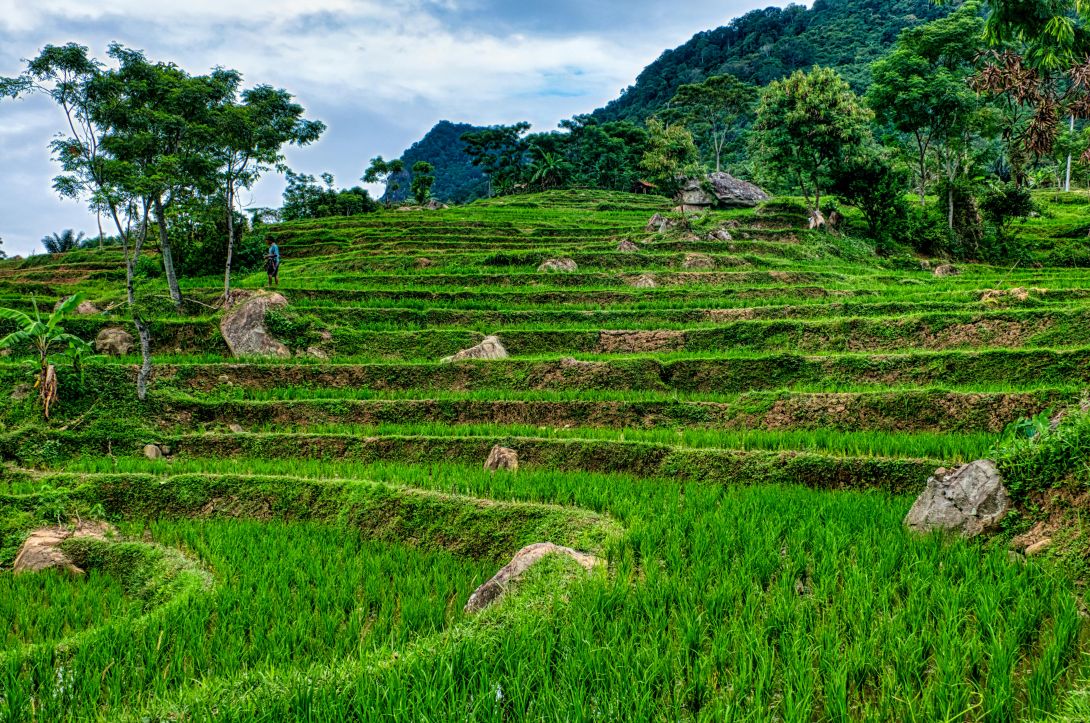
The journey pulls you through rural Java, past rice paddies, villages, and layers of mountains that slowly reveal themselves as the hours pass. It’s smooth, quiet, and runs to schedule.
After the intensity of Banyuwangi, it feels like a reset.
KAI offers four clear classes, Economy, Executive, Panoramic, and Suite, which means you can tailor the experience to your budget. We chose Executive Class ($65 per person AUD), and it struck the balance perfectly. Comfortable seating, air-conditioning, and enough space to actually enjoy the journey.
You step off the train in Malang not exhausted, but ready to explore.
Stop 2: Malang (4–5 Nights)
A Base Worth Staying For
Malang feels like a shift in tone the moment you arrive.
The air is cooler.
The streets open up.
And the pace softens just enough to notice it.
After the raw, energetic feel of Banyuwangi, Malang brings a sense of balance.
There’s history here too, even if it’s not immediately obvious. Once a Dutch colonial hill town, Malang still carries traces of that past in its leafy boulevards, older architecture, and more structured layout. It was designed as a place to retreat from the coastal heat, and that intention still lingers in the atmosphere today.
It’s a city that feels lived in, not built for show.
And that’s what makes it easy to settle into.
The food scene is a big part of that experience. Local warungs sit alongside modern cafés, and it’s one of the few places where you can move easily between traditional Indonesian dishes and more contemporary options without it feeling forced. It’s accessible, varied, and consistently good.
But the real value of Malang isn’t just the city itself.
It’s what surrounds it.
The first is Tumpak Sewu Waterfall.
This isn’t something you casually stop at on the side of the road. It’s a full-day commitment. The descent is steep, the terrain uneven, and you’ll need to work your way down carefully. But once you reach the base, everything shifts.
You’re standing inside a vast, curved wall of waterfalls, water falling from every angle, mist rising, sound echoing through the canyon.
It’s immersive in a way that photos don’t capture.
And then there’s Mount Bromo.
A completely different kind of experience.
Your day starts at midnight. A Jeep pulls you into the darkness of the national park, climbing steadily while the landscape remains hidden. By 4:00am, you’re standing at a viewpoint in the cold, waiting alongside others who’ve made the same early commitment.
Then, slowly, the light begins to arrive.
The sun rises behind Mount Semeru, revealing a vast volcanic basin that feels almost unreal in scale and texture.
But the experience doesn’t end there.
You descend into the basin, cross the sea of sand, and make your way up to the crater itself. Steam rises constantly from within, a reminder that this is still active, still shifting, still powerful.
It’s not just something you see.
It’s something you move through in layers.
What makes Malang work so well is this contrast.
A calm, structured city… surrounded by some of the most raw and dramatic landscapes in Indonesia.
It gives you a place to recover, to reset, and then to step back out into experiences that demand more from you.
Malang isn’t somewhere you pass through quickly.
It’s somewhere you base yourself properly.
And the longer you give it, the more it gives back.
Our rating: 9/10
Train: Malang → Surabaya (2–3 Hours)
Short, Local, and Real
This is a shorter leg, but it reinforces the same point.
The train system works.
We chose Economy Class for this journey ($30 per person AUD), and it offered a more local experience. Simpler seating, more movement, but still clean, efficient, and on time.
It’s a reminder that you don’t always need to upgrade for things to work well.
Stop 3: Surabaya (1–2 Nights)
A Functional Pause
Surabaya is a contrast to everything that comes before it.
Busier.
Denser.
Faster in every sense.
After the cooler, more relaxed rhythm of Malang, arriving here feels like stepping into the engine room of Java.
As Indonesia’s second-largest city, Surabaya isn’t built around tourism. It’s a working city, shaped by trade, industry, and movement. That’s part of its identity. This is where you start to see everyday Indonesian life at scale, from packed streets and shopping centres to ports, business districts, and constant activity that rarely slows.
But beneath that modern surface, there’s a deeper story.
Surabaya is often referred to as the “City of Heroes,” a title rooted in its central role in Indonesia’s fight for independence. The Heroes Monument stands as a reminder of the 1945 Battle of Surabaya, one of the most significant and defining moments in the country’s history. It’s a point of pride for locals, and a layer of meaning that sits quietly beneath the city’s fast-moving exterior.
There are also pockets where the past still shows through.
Colonial-era buildings, traditional markets, and older neighbourhoods exist alongside modern infrastructure, creating a city that feels layered rather than polished. It’s not curated or particularly easy to navigate as a visitor, but it is real.
And that’s the key to understanding Surabaya.
It’s not trying to impress you.
It’s functioning.
For most travellers, it won’t be a highlight in the traditional sense. There are no defining “must-see” moments that anchor your stay in the same way as other parts of Java.
But it serves an important role.
A place to pause.
To reset.
To step briefly into the pace of everyday Indonesian life before moving on.
If you approach it with that mindset, Surabaya makes sense.
Not as a destination you linger in.
But as a city that adds context to everything else you experience across Java.
Our rating: 6/10
Train: Surabaya → Yogyakarta (4–5 Hours)
Comfort Without Complication
This is one of the smoother legs of the journey.
We returned to Executive Class here for added comfort, and it delivered exactly what you want. Even with multiple stops along the way, the train remains consistent, efficient, and on schedule.
There’s no sense of disruption.
Just steady movement across the landscape.
Stop 4: Yogyakarta (4–5 Nights)
Culture, Depth, and Contrast
Yogyakarta feels layered from the moment you arrive.
Creative.
Historic.
Deeply connected to identity and tradition.
It’s one of the few places in Indonesia where culture isn’t something preserved for visitors. It’s still actively lived. The city remains the heart of Javanese culture and is one of the last regions governed by a Sultan, with the Kraton Yogyakarta (Royal Palace) still playing a central role in daily life and tradition.
That connection to heritage runs through everything.
Art, music, batik, food, architecture. It’s not curated. It’s embedded.
And it’s a place that rewards curiosity and time.
The experiences here are some of the most significant in Indonesia, but they ask something of you in return.
Borobudur Temple isn’t something you rush. You move through it slowly, circling each level, taking in the intricate carvings and the gradual shift from detail to openness. It feels less like sightseeing and more like a quiet, deliberate journey.
Then there’s Prambanan Temple.
A completely different energy.
Taller.
Sharper.
More imposing.
The towering structures rise with precision, and the detailed reliefs tell stories from the Ramayana. Where Borobudur feels introspective, Prambanan feels declarative.
And then there’s Jomblang Cave.
An experience that shifts everything again.
You abseil 60 metres into a vertical cave, step into darkness, and then work your way through mud and narrow passages before reaching the moment everyone comes for, “Heaven’s Light” breaking through from above.
It’s not easy.
It’s not comfortable.
But it’s something you don’t forget.
Beyond these major sites, Yogyakarta has a pulse of its own.
Malioboro Street comes alive with markets, street food, and constant movement. Small warungs serve local dishes, artists display their work, and the city’s creative energy shows up in everyday moments rather than staged experiences.
It feels authentic because it is.
This isn’t a place to move through quickly.
It’s a place to explore properly. To wander, to observe, and to let the layers reveal themselves over time.
Our rating: 8/10
Train: Yogyakarta → Bandung (6–7 Hours)
The Journey You Look Forward To
If there’s one train journey to prioritise, it’s this one.
Upgrade to panoramic ($90 per person) if you can. The price includes access to a VIP lounge at the terminal and a meal and snacks on board which we were surprised and grateful for!
Large windows open up the landscape, turning the trip into something far more than transport. Rice terraces, valleys, bridges, and villages unfold slowly outside.
It feels cinematic at times.
There’s no urgency.
Just movement through one of Java’s most beautiful regions.
Stop 5: Bandung (4–5 Nights)
A Softer Landing
Bandung offers a different kind of finish.
The air is cooler.
The pace eases.
And after the intensity of earlier stops, it feels like a place to finally exhale.
There’s a history here that quietly shapes the experience. During the Dutch colonial period, Bandung was known as the “Paris of Java,” a retreat city chosen for its climate, elevation, and lifestyle appeal. That influence still lingers in the architecture, the leafy streets, and the way the city seems to balance structure with creativity.
You feel it in the details.
Cafés that are thoughtfully designed rather than rushed.
Neighbourhoods that carry character rather than uniformity.
A mix of heritage buildings and modern spaces that sit comfortably side by side.
It’s a city that has evolved, but hasn’t lost its identity in the process.
Step just outside the centre and the landscape shifts again. Tea plantations roll across the hills in neat, endless lines, while volcanic sites like Kawah Putih offer something more surreal, a crater lake with shifting colours that feels almost otherworldly against the surrounding terrain.
But what really grounded the experience for us was Braga Street.
This is where Bandung’s past and present meet most clearly.
By day, Braga Street feels almost nostalgic. Colonial-era buildings line the street, now home to small boutiques, art galleries, and cafés. It’s easy to slow down here, to wander without purpose, to sit and watch the city move around you.
You get a sense of what Bandung once was.
But at night, it becomes something else entirely.
The street comes alive.
Music drifts out from bars and cafés. Lights bounce off the old facades. Street performers, food vendors, and locals fill the space with an energy that feels natural rather than staged. It’s not chaotic, just alive enough to draw you in and keep you there longer than you expected.
It feels social.
Connected.
Real.
If you want to feel the heartbeat of Bandung, this is where you go.
Not to tick something off.
But to sit, walk, observe… and be part of it.
Bandung doesn’t demand your attention.
It earns it slowly.
Our rating: 9/10
Optional: Jakarta (1–2 Nights)
A Final Contrast
If you’re flying out, Jakarta is often unavoidable.
It’s busy.
Fast.
Unapologetically intense.
At first, it can feel overwhelming. Traffic, scale, constant movement. It’s a sharp contrast to the rhythm you’ve likely settled into across the rest of Java.
But if you look a little closer, there’s more here than just a transit point.
Landmarks like National Monument (Monas) rise out of the city as a symbol of Indonesia’s independence, offering panoramic views if you make the trip to the top. Nearby, Istiqlal Mosque stands as one of Southeast Asia’s largest mosques, directly across from the neo-Gothic Jakarta Cathedral, a striking example of religious coexistence in the heart of the capital.
For something more grounded in history, the old town of Kota Tua Jakarta offers a glimpse into the city’s colonial past, with restored Dutch-era buildings, museums, and open squares that feel worlds away from the modern skyline.
And if you’re after a softer moment within the chaos, places like Taman Mini Indonesia Indah give you a curated look at Indonesia’s diverse cultures in one location.
So yes, Jakarta can feel like a lot.
But it’s also layered.
Historic.
Culturally significant.
The key is how you approach it.
Not as somewhere to fully unpack and explore in depth, but as a place to experience in moments. A transition, yes, but one that still has something to offer if you give it just enough time.
Our rating - 8/10
Final Reflection: Why This Route Works
This journey works because it flows.
From raw beginnings in Banyuwangi…
To adventure in Malang…
To culture in Yogyakarta…
To a softer finish in Bandung...To the final stint in Jakarta
And through it all, the train connects everything seamlessly.
No traffic.
No unpredictability.
No exhaustion between stops.
Just a steady rhythm that lets you experience Java as it should be experienced.
The Simple Recommendation
If you’re planning Java:
Follow this route.
Take the train.
Give each place the time it deserves.
Because Java isn’t somewhere you rush through.
It’s somewhere you move through, one journey at a time.
With Java,
G&T
Find stories and insights that inspire your own path forward
Discover insights that elevate your travel, sharpen your leadership, and support your personal growth..
Join Our Adventure Today!
Stay updated with our latest travel stories, tips, and adventures. Join our newsletter!