Rehearsing Courage Daily
How rewriting fearful narratives and taking action transformed uncertainty into confidence during our journey into full-time travel and life's transitions.
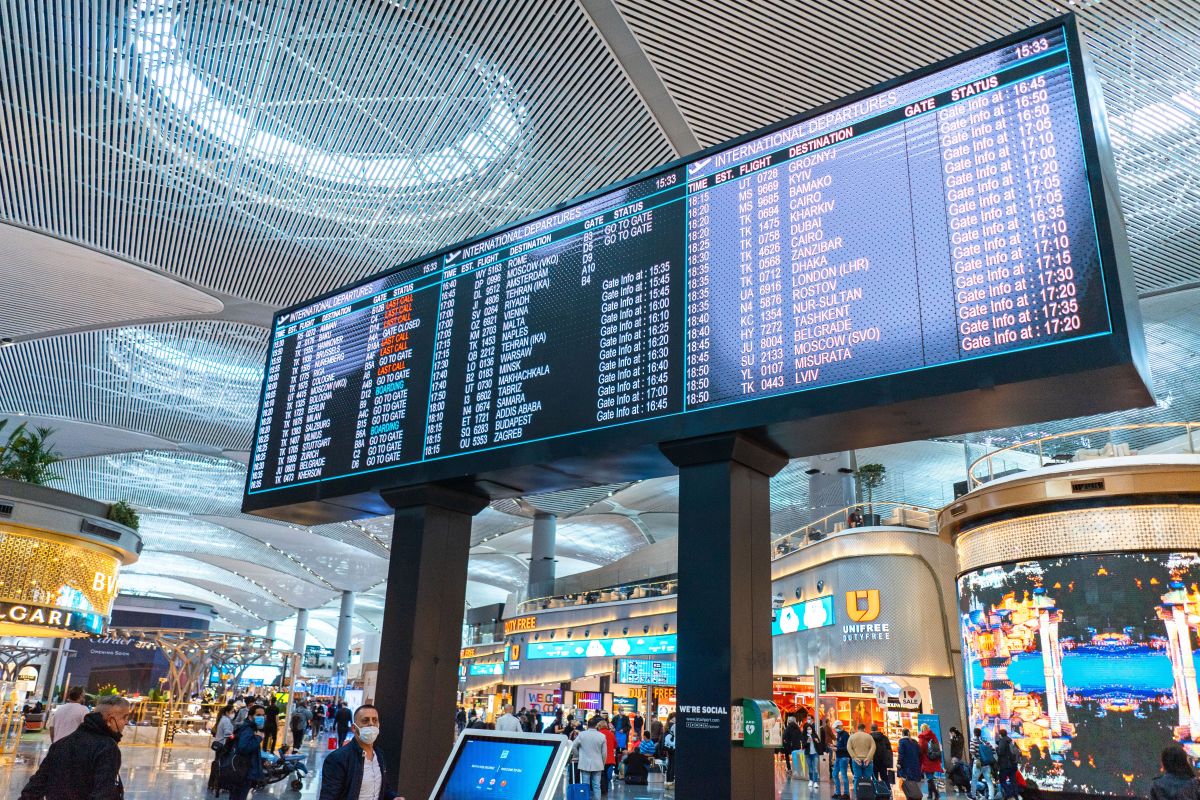
Before we packed our lives into two backpacks and stepped into full-time travel, we spent months imagining everything that could go wrong.
What if we ran out of money?
What if one of us got sick in a country we didn't know?
What if we missed the life we had worked so hard to build?
What if we regretted leaving behind careers, routines, and identities that had shaped us for decades?
At first, these questions felt sensible. Responsible, even.
For most of our lives, careful planning had served us well. We had built careers, navigated uncertainty, and made significant decisions by identifying risks and preparing for different outcomes.
But somewhere along the way, preparation quietly turned into something else.
We stopped planning for the future and started rehearsing disasters.
I remember waking in the middle of the night and wondering whether we were making an expensive mistake. Even after booking the flights and packing our bags, part of me questioned whether we were walking away from everything we had spent decades building.
The more we replayed those scenarios, the more convincing they became. Our bodies responded as though the threat was already real.
Heart racing. Muscles tense. Sleep interrupted.
Yet nothing had happened.
We weren't living in the present anymore. We were living in an imagined future.
What we eventually discovered changed not only how we approached full-time travel, but how we think about fear itself.
If fear can be rehearsed, so can confidence.
The Stories We Repeat Become the Life We Experience
Neuroscientists have long understood that the brain changes in response to repetition. Each time we revisit a thought, we strengthen the neural pathways associated with it, whether that thought is empowering or limiting.
In practical terms, the stories we tell ourselves matter.
When we repeatedly imagine failure, embarrassment, regret, or loss, our brains become more efficient at anticipating those outcomes. Over time, fear stops feeling like a possibility and starts feeling like a certainty.
The challenge is that human beings are remarkably poor at predicting the future.
Psychologist Daniel Gilbert, author of Stumbling on Happiness, argues that we consistently overestimate both the intensity and duration of future emotions. We imagine worst-case scenarios with extraordinary detail and then mistake those imagined outcomes for reality.
Our minds are excellent at creating vivid futures.
They are simply not very good at predicting which futures will actually unfold.
That realisation was both confronting and liberating.
If the mind can rehearse failure with such conviction, it can also rehearse resilience. If it can imagine regret, it can imagine growth.
If it can visualise falling, it can also visualise recovering.
So we began telling ourselves a different story.
A story where we adapted.
A story where things went wrong and we found a way through.
A story where uncertainty wasn't a threat to eliminate, but an invitation to explore.
The fear didn't disappear. But it gradually stopped driving the conversation.
The Fear We Never Predicted
Looking back now, one of the most surprising things about our decision to travel full-time is how few of our original fears actually materialised.
We haven't run out of money.
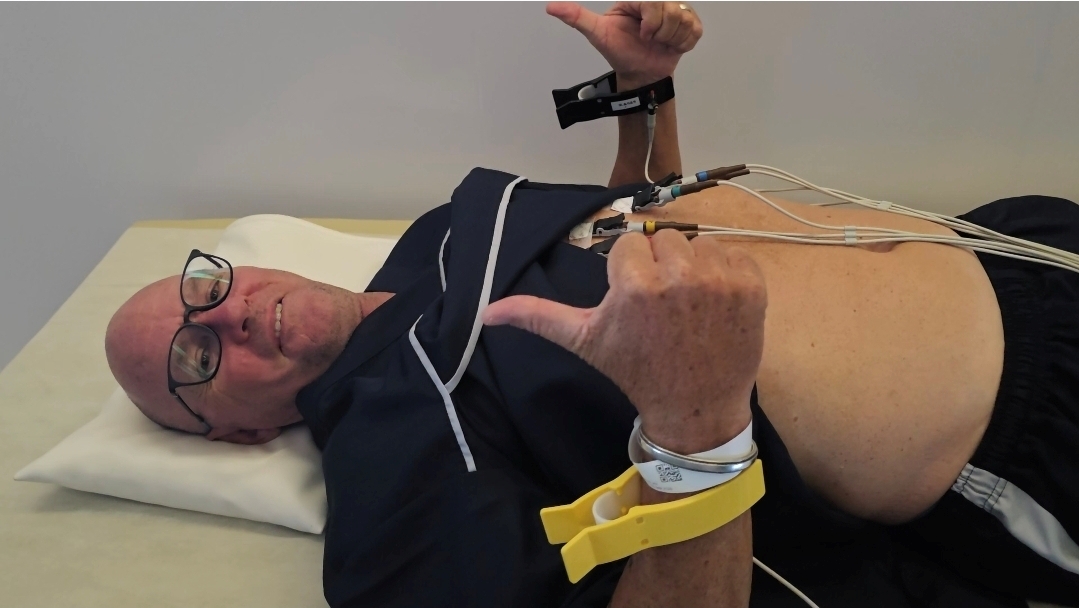
We've navigated illness, missed connections, unexpected border changes, language barriers, and plans that unravelled without warning.
And each time, we adapted.
What we didn't anticipate was how quickly new routines would emerge. We didn't expect how naturally we would learn to solve problems in unfamiliar environments or how many strangers would show us kindness when things didn't go to plan.
We certainly didn't predict the confidence that comes from repeatedly proving to yourself that you can handle more than you thought possible.
The fearful mind rarely imagines resilience.
Yet resilience is often what emerges.
Fear Is Information, Not Instruction
For much of our lives, we treated fear as a signal to pause.
If we felt uncertain, we assumed we needed more information. If we felt anxious, we believed we weren't ready.
But confidence rarely arrives before action. More often, it follows it.
Before we left Australia, we believed certainty was a prerequisite for change. We discovered that action was the path to certainty.
Fear is not a stop sign.
It's information.
It tells us that something matters. That we're stepping beyond the boundaries of what feels familiar and predictable.
In many cases, fear is less a warning to retreat than an invitation to grow.
The psychologist Susan Jeffers captured this idea perfectly in her book Feel the Fear and Do It Anyway:
"The only way to get rid of the fear of doing something is to go out and do it."
Avoidance provides temporary relief, but it reinforces the belief that we are incapable of handling what scares us.
Exposure does the opposite.
It teaches us that we can.
The Antidote to Fear
Think back to the first time you did something that genuinely scared you.
You probably didn't feel ready. You simply took the next step. And then the next.
That's how confidence is built. Not through certainty, but through evidence.
Every time we face something that scares us, we give our nervous system new information.
We teach ourselves a simple but powerful truth:
I can survive this. Each small act of courage builds on the one before it.
What once felt impossible becomes uncomfortable.
What felt uncomfortable becomes familiar.
And what felt familiar becomes part of who we are.
Action Creates the Confidence We Seek
One of the biggest misconceptions about courage is that brave people feel less fear.
In our experience, they don't.
They simply stop waiting for certainty.
We didn't wake up one day feeling completely ready to leave everything familiar behind.
We simply bought the tickets. Then we packed our bags. Then we boarded the plane.
Each small action created a little more confidence than the one before it.
Movement created momentum.
Action created clarity.
Fear grew quieter because experience gave us evidence that we could handle the unknown.
Rewriting the Script
Fear has an important role to play.
It exists to protect us.
The challenge is not to eliminate it, but to stop allowing it to become the author of our lives.
Confidence is not the absence of fear. It is the accumulation of moments when we felt afraid and moved anyway.
Every time we choose action over avoidance, curiosity over certainty, or growth over comfort, we rewrite the story we tell ourselves about who we are and what we're capable of.
If you're standing at the edge of your own next leap, whether it's a career change, a personal reinvention, a difficult conversation, or your own version of a world adventure, remember this:
The future you've imagined with fear is no more real than the future you can imagine with courage.
The difference lies in which one you choose to rehearse.
You don't need to eliminate fear to grow.
You only need to stop giving it the final word.
With confidence,
G&T
Find stories and insights that inspire your own path forward
Discover insights that elevate your travel, sharpen your leadership, and support your personal growth..

Join Our Adventure Today!
Stay updated with our latest travel stories, tips, and adventures. Join our newsletter!