
Taman Ujung Stillness
A reflective guide to Taman Ujung Water Palace, blending practical travel insight with a calm, unhurried experience of Bali’s quieter beauty.
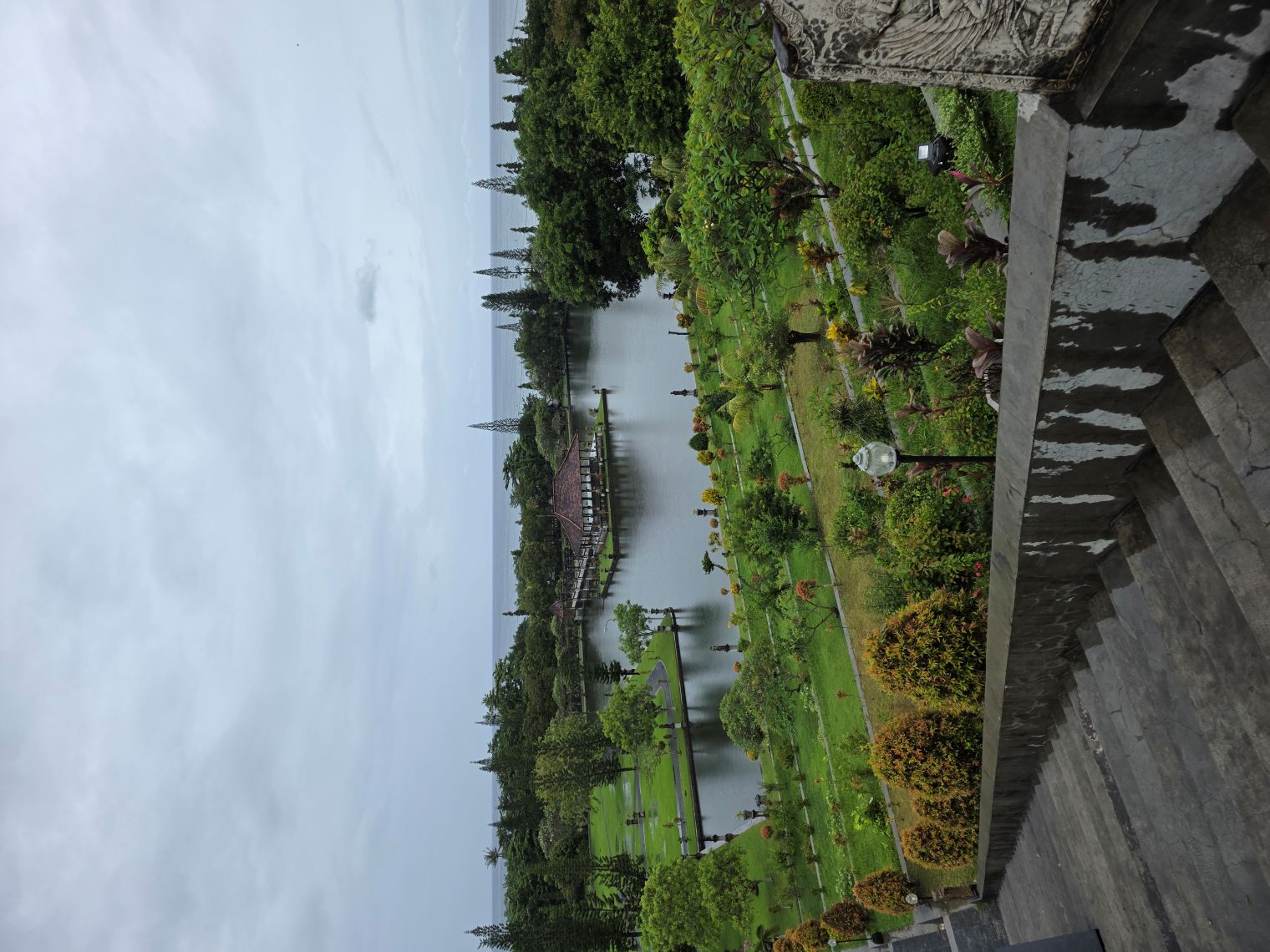
Some places impress immediately.
Others reveal themselves more slowly.
Taman Ujung Water Palace belongs to the second group.
It is located approximately 5 kilometres south-east of Amlapura on the south-east coast of Bali.
We arrived mid-morning, the air already warm but softened by a light coastal breeze. What stood out first wasn’t the architecture or even the water.
It was the space.
After days of busy streets, temples, and movement, this felt different. Open. Calm. Unhurried.
You don’t feel pulled through Taman Ujung.
You feel invited to wander.
First Impressions: Balance and Reflection
Built in the early 20th century by the King of Karangasem, Taman Ujung is less about grandeur in the traditional sense and more about balance.
Water dominates the landscape.
Large, still pools stretch out in clean lines, connected by narrow walkways and bridges that seem to float just above the surface. Pavilions sit quietly at different points, offering places to pause rather than points to rush toward.
There’s a symmetry to it all that feels intentional without being rigid.
Every angle offers a reflection.
Every step shifts the perspective slightly.
Walking the Pathways
The experience here is simple, and that’s exactly its strength.
You walk.
Across stone bridges.
Along garden paths.
Between water and structure.
There’s no fixed route, no pressure to move in a certain direction. You find your own pace without realising it.
At times, it feels almost meditative.
The sound of water.
The quiet movement of other visitors.
The occasional breeze moving across the surface.
It’s not dramatic.
It’s steady.
Climbing for Perspective
At the far end of the complex, a series of steps lead you up to a higher viewpoint.
It’s a gentle climb, but one worth taking.
From above, the design becomes clear.
The pools, the pathways, the pavilions, all laid out with precision against the surrounding landscape. On a clear day, you can see the outline of Mount Agung in the distance, adding another layer to the view.
It’s the moment where the place shifts from being something you’re in… to something you can fully see.
A Different Kind of Landmark
Taman Ujung doesn’t compete with Bali’s more famous temples.
It doesn’t need to.
There are no crowds pressing in.
No single focal point demanding attention.
Instead, it offers something quieter.
A chance to slow down.
To move without urgency.
To notice small details.
To let the space do what it was designed to do.
Practical Notes: Making the Most of It
Getting to Taman Ujung is part of the experience.
Located in East Bali near Karangasem, it’s often reached by private driver, sometimes combined with nearby sites like Tirta Gangga or coastal viewpoints.
The journey takes a little longer than more central attractions, which likely explains why it feels less crowded.
Arriving earlier in the day helps avoid the heat, as much of the complex is exposed. Comfortable footwear makes a difference, not because it’s difficult terrain, but because you’ll naturally cover more ground than expected.
And like many places in Bali, a bit of patience and a slower pace will give you far more than trying to rush through it.
Final Reflection: Letting It Settle
There’s nothing urgent about Taman Ujung.
No checklist.
No rush.
No pressure to capture the perfect moment.
And maybe that’s why it stays with you.
Because in a place designed around water, reflection, and balance, you find yourself doing the same.
Not thinking about where to go next.
Just being exactly where you are.
With balance,
G&T
Find stories and insights that inspire your own path forward
Discover insights that elevate your travel, sharpen your leadership, and support your personal growth..
Join Our Adventure Today!
Stay updated with our latest travel stories, tips, and adventures. Join our newsletter!