
Kampong Phluk Cambodia
Explore Kampong Phluk floating village on Cambodia's Tonlé Sap Lake, discovering towering stilt houses, traditional fishing communities and fascinating history
Kampong Phluk: A Village That Lives With the Water
We thought we had seen some extraordinary ways of living during our travels through Southeast Asia, but approaching Kampong Phluk by boat introduced us to something entirely different.
Rising above the water were rows of houses perched on towering stilts, some reaching almost ten metres above the ground. It was difficult to imagine what these homes must look like during the dry season, when the water disappears and the village streets emerge far below.
As we travelled along the waterway, we tried to picture the same scene without the lake beneath us: children walking along dusty streets, families gathering beneath their houses and boats resting on ground that would eventually disappear beneath metres of water.
What fascinated us wasn't simply the unusual architecture, but the realisation that an entire community had organised its life around a landscape that changes dramatically every year.
Located near Cambodia's enormous Tonlé Sap Lake, Kampong Phluk offered us a perspective on the country that was very different from the ancient temples of Angkor. Here, history wasn't preserved in stone monuments. It was reflected in the homes, livelihoods and traditions of people whose lives have been shaped by water for generations.
When the Lake Changes Direction
To understand Kampong Phluk, we first need to understand Tonlé Sap, Cambodia's largest freshwater lake and one of Southeast Asia's most remarkable natural ecosystems.
Its defining feature is an extraordinary seasonal transformation.
During the dry season, water flows from Tonlé Sap towards the Mekong River. But when the monsoon arrives and the Mekong rises, the Tonlé Sap River reverses direction, pushing enormous volumes of water back towards the lake.
The result is a dramatic expansion. Tonlé Sap can grow to several times its dry-season area, flooding forests, fields and surrounding communities. In some locations, water levels rise by eight metres or more, transforming familiar landscapes into vast waterways.
This annual cycle has shaped Cambodian civilisation for centuries. The seasonal floods replenish surrounding floodplains, create important habitats for fish and support one of the world's most productive inland fisheries.
During the height of the Khmer Empire, the lake and its surrounding agricultural landscapes helped sustain the population of the wider Angkor region. While Angkor Wat reveals the architectural achievements of Cambodia's ancient rulers, Tonlé Sap provides another connection to the country's history through the natural resources that supported generations of people.
Today, the lake remains vital to Cambodia's food security and rural economy. Its ecological significance was internationally recognised when UNESCO designated the Tonlé Sap Biosphere Reserve in 1997.
For communities living along its changing shoreline, however, the lake's importance is far more immediate. Its seasonal rhythm influences almost every aspect of daily life.
A Village Built for Two Seasons
As our boat travelled through Kampong Phluk, the height of the houses became even more impressive.
Supported by enormous timber and concrete stilts, the buildings seemed almost suspended above the landscape. During the wet season, boats navigate the waterways beneath them, while in the dry months the exposed ground becomes streets, communal spaces and places for everyday activities.
We learned that during April and May, much of the area beneath these houses can be completely dry. It was difficult to reconcile that image with the village we were seeing, yet the architecture makes perfect sense when we consider the environment.
Rather than constructing homes that would be repeatedly flooded, generations of residents have built upwards, allowing the water to rise and retreat beneath them.
Fishing has traditionally been central to life around Tonlé Sap, providing food, employment and income for communities such as Kampong Phluk. The annual flooding creates important breeding and feeding habitats for fish, supporting livelihoods that depend on the changing seasons.
Agriculture, tourism and other small-scale activities provide additional opportunities, while crocodile farming also exists within the wider Tonlé Sap economy.
But life here is not without its challenges. Fishing incomes fluctuate, transport changes with the seasons and families must adapt to environmental conditions that can be increasingly unpredictable.
What appears extraordinary to visitors is, for residents, a practical reality that influences how they work, travel and support their families.
Beyond the Stilt Houses
One of the most memorable parts of our visit was the opportunity to disembark and walk through sections of Kampong Phluk.
From the boat, the towering houses dominated our attention. On foot, however, we began noticing the ordinary details of village life. Children were playing, families were going about their daily routines and the community continued with the familiar activities that make up life anywhere in the world.
We were also invited to speak at a local children's English school, an unexpected opportunity to connect with the village in a more personal way and one of the highlights of our visit.
After spending so much time learning about the traditional livelihoods associated with the lake, it was encouraging to see another aspect of community life centred on education.
For younger generations, learning English may provide opportunities that extend beyond the fishing and agricultural activities that have supported their families for generations. We couldn't know what the future held for those children, but the encounter offered a glimpse of a community looking beyond the immediate demands of its environment.
It also reminded us that Kampong Phluk is much more than its extraordinary architecture.
For travellers, the towering houses and seasonal flooding are fascinating because they are so different from what we know. But for the people who live here, the village is simply home, with the same hopes, responsibilities and everyday concerns found in communities around the world.
Beyond the houses lies another remarkable feature of Tonlé Sap: its seasonally flooded forests.
During periods of high water, trees become partially submerged, creating narrow waterways that can be explored by small canoe. These forests provide important habitats for fish, birds and other wildlife, making them essential to the lake's ecological health and the livelihoods of surrounding communities.
A Lake Facing an Uncertain Future
Tonlé Sap has sustained communities across Cambodia for centuries, but its future faces growing environmental pressures.
Changes in rainfall patterns, upstream dam development, pressure on fish populations and the loss of flooded forests threaten the natural systems that make the lake so productive.
For families whose incomes depend on fishing and the annual movement of water, these challenges have immediate consequences.
It would be easy to romanticise Kampong Phluk as a community living in perfect harmony with nature. The reality is more complicated. Adapting to dramatic seasonal flooding requires ingenuity, but it also brings uncertainty and practical difficulties.
Residents must navigate these challenges alongside the familiar concerns of providing for their families, educating their children and creating opportunities for the future.
As we travelled beyond the village and onto the enormous expanse of Tonlé Sap Lake, we began to appreciate just how closely the community's fortunes were connected to this remarkable body of water.
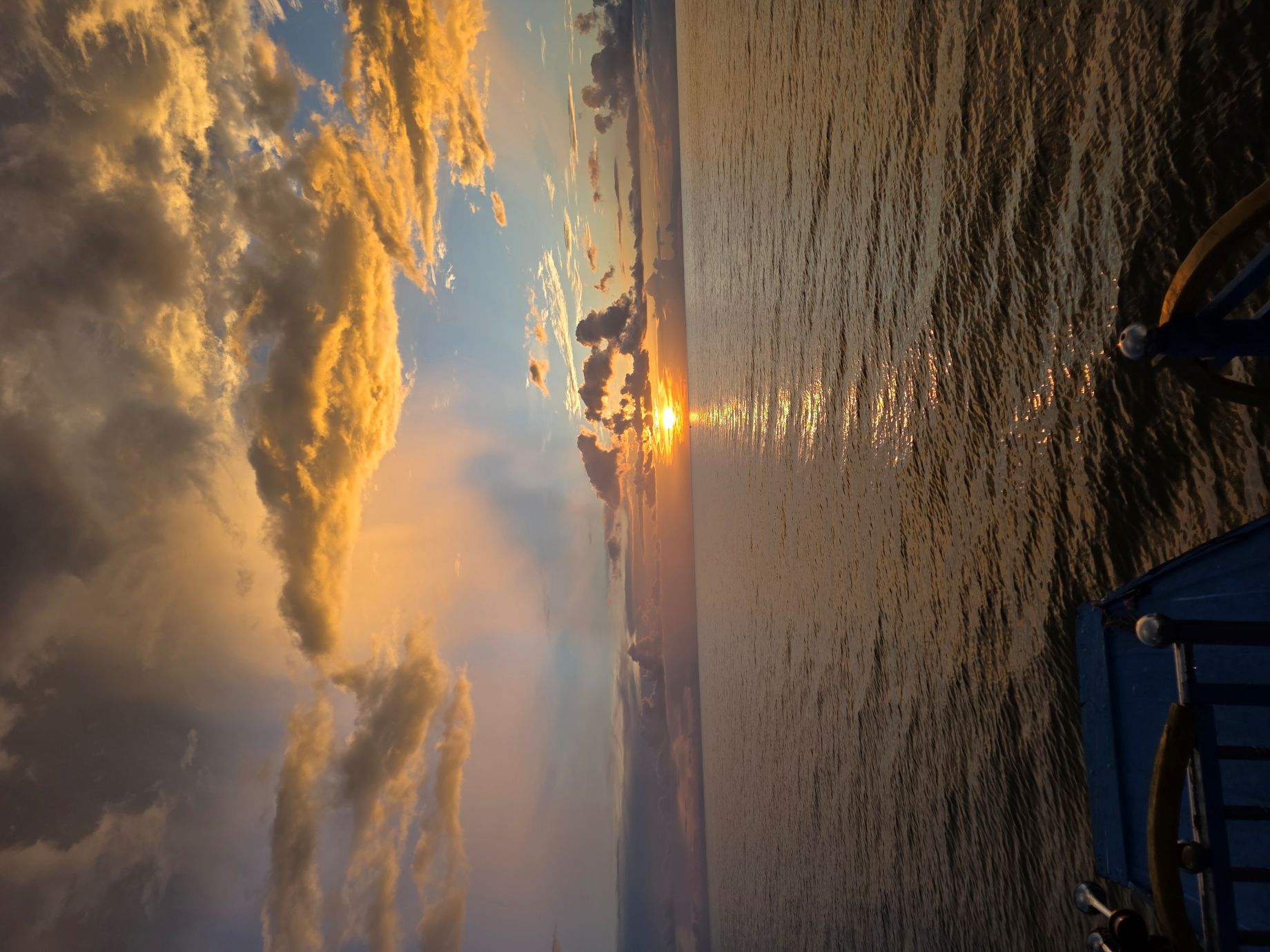
After the narrow waterways and towering houses, the openness of the lake was striking. Water stretched towards the horizon, with little to interrupt the meeting of lake and sky.
As the afternoon gave way to evening, we watched the changing light across the water, reflecting on the history and everyday life we had encountered.
A Different Side of Cambodia
Much of Cambodia's international identity is understandably connected to Angkor Wat and the extraordinary achievements of the Khmer Empire.
Those ancient temples reveal a civilisation capable of remarkable engineering, architectural ambition and cultural sophistication. But Kampong Phluk offered us another perspective on the country's history.
While the temples tell stories of kings, religion and monumental construction, Tonlé Sap tells the quieter story of communities whose livelihoods have depended on the natural environment for generations.
Both are important parts of understanding Cambodia.
What stayed with us wasn't simply the height of the houses or the extraordinary seasonal flooding. It was the opportunity to look beyond those unusual surroundings and recognise the lives unfolding within them.
The children playing in the village, the families going about their routines and the unexpected invitation to visit the English school gave the experience a human dimension that no photograph of the stilt houses could fully capture.
By the time we reached the open waters of Tonlé Sap, our fascination with the village's architecture had developed into a greater appreciation of the people who call it home.
For most of us, a permanent home means solid ground, familiar streets and surroundings that remain relatively unchanged.
For generations of families in Kampong Phluk, the landscape has transformed with every passing season. Streets become waterways, the lake expands and retreats, and daily life adjusts accordingly.
Yet beneath those extraordinary differences lies something wonderfully familiar: families building their lives, preserving their traditions and hoping to create a better future for the next generation.
The land may come and go, but the sense of home endures.
With perspective,
G&T
Find stories and insights that inspire your own path forward
Discover insights that elevate your travel, sharpen your leadership, and support your personal growth..
Join Our Adventure Today!
Stay updated with our latest travel stories, tips, and adventures. Join our newsletter!