
Kuala Lumpur Malaysia
Discover Kuala Lumpur, Malaysia, exploring Petronas Towers, Merdeka 118, KL Tower, cultural landmarks, street food and the city's remarkable transformation
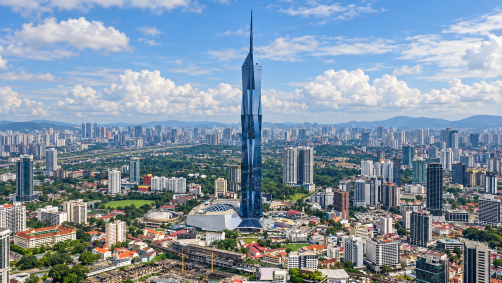
Kuala Lumpur: A city looking up.
Some cities seem most interested in preserving what they were. Others appear determined to show the world what they intend to become. Kuala Lumpur somehow manages to do both, creating a fascinating contrast between extraordinary modern ambition and the cultural traditions that have shaped Malaysia's identity.
We arrived expecting the skyline we already knew from photographs. The Petronas Twin Towers are so closely associated with Kuala Lumpur that it is difficult to imagine the city without them. Yet as we explored Malaysia's capital, another building increasingly demanded our attention.
Rising 678.9 metres above the city, it is the second-tallest building in the world, an extraordinary statement of architectural confidence. From different parts of Kuala Lumpur, it seemed to reappear unexpectedly, sometimes framed by older buildings, sometimes towering beyond neighbourhoods that belonged to a very different chapter of the city's history.
The more we explored, the more we realised that Kuala Lumpur's skyline was telling us something about the city itself. These enormous structures weren't simply expressions of engineering achievement. They represented a country determined to shape its future while remaining connected to its past.
A Skyline Built on Ambition
Kuala Lumpur's story began considerably closer to the ground.
During the nineteenth century, the settlement developed around the confluence of the Klang and Gombak rivers, growing through the tin-mining economy before becoming an important administrative and commercial centre. Its transformation from a relatively modest settlement into a major international city has been remarkable.
Standing beneath the Petronas Twin Towers, it is difficult not to appreciate the scale of that change.
Completed in 1998, the towers became the tallest buildings in the world, a distinction they held until 2004. Their significance extended well beyond architecture. They symbolised Malaysia's growing economic confidence and its determination to establish a prominent position on the international stage.
We visited during the day and returned at night, when the illuminated towers appeared even more impressive against the dark sky. Around KLCC, people gathered to admire them, photograph them and enjoy the atmosphere of one of Kuala Lumpur's most recognisable public spaces.
Yet the Petronas Towers were never going to represent the final chapter of the city's architectural ambitions.
Across Kuala Lumpur, Merdeka 118 had taken the idea considerably higher.
Its name references Malaysian independence, while its location near Stadium Merdeka connects it to the historic site where independence was proclaimed in 1957. The tower's design also draws inspiration from the raised-hand gesture of Malaysia's first prime minister, Tunku Abdul Rahman, during that defining moment.
There is something particularly meaningful about a building representing the country's future while deliberately acknowledging its past.
Perhaps that is Kuala Lumpur in architectural form: a city looking forward without entirely turning its back on where it came from.
The View From Above
Our visit to KL Tower offered another perspective on the city.
From street level, Kuala Lumpur can sometimes feel like a collection of different places competing for space. Modern shopping centres sit beside older neighbourhoods, highways intersect busy streets and enormous buildings rise above areas that retain a distinctly traditional character.
From above, those seemingly disconnected elements begin to form a more complete picture.
The Petronas Towers anchor one part of the skyline, while Merdeka 118 dominates another. Roads and railways weave between commercial districts, residential neighbourhoods and pockets of greenery, revealing a city that has grown rapidly and continues to evolve.
But looking across Kuala Lumpur also prompted another thought.
We often measure the progress of cities through their infrastructure, economic growth and increasingly ambitious architecture. Taller buildings, larger developments and modern transport systems become visible evidence of success.
Yet the height of a skyline tells us relatively little about the quality of life unfolding beneath it.
Like other rapidly developing cities, Kuala Lumpur must balance growth with questions about affordability, heritage preservation, congestion and the needs of its communities. Architectural ambition is impressive, but the more meaningful measure of progress may be how successfully a city brings its people along on that journey.
And to appreciate Kuala Lumpur's people and cultural identity, we needed to spend less time looking upwards.
The City Beneath the Skyline
An evening on Jalan Alor reveals a very different Kuala Lumpur.
As daylight fades, the street comes alive with restaurants, food stalls, bright signs and crowds searching for something delicious to eat. Tables occupy the pavements, smoke rises from grills and the unmistakable sounds of busy kitchens compete with conversations unfolding around them.
There is something wonderfully unpretentious about it.
While the towers above Kuala Lumpur express national ambition, streets such as Jalan Alor reveal the everyday traditions that give the city its character.
Food has always been one of our favourite ways to understand a destination, and Malaysia offers an extraordinary cultural mix. Malay, Chinese and Indian influences have shaped the country's cuisine over generations, creating a food culture that reflects its complex history of migration, trade and community.
Here, the city's identity isn't expressed through height or architectural grandeur. It is found in familiar recipes, shared meals and the everyday activity of people going about their lives.
Another experience that captured this contrast was our visit to Thean Hou Temple.
Perched above the surrounding city, this beautiful Chinese temple features sweeping roofs, ornate carvings, red pillars and decorative lanterns. Dedicated primarily to Mazu, the Chinese sea goddess, it reflects the enduring traditions of Malaysia's Chinese community.
With Kuala Lumpur's modern skyline visible beyond its traditional architecture, the setting provides a remarkable visual contrast. Yet the relationship between the two is more meaningful than simply old versus new.
Both are expressions of the same city.
So are the mosques, Hindu temples, markets, colonial-era buildings and neighbourhoods that reflect the many communities responsible for shaping modern Malaysia.
Kuala Lumpur's identity hasn't developed by replacing one culture with another. It has evolved through their coexistence, interaction and influence.
And that cultural richness is every bit as important as the skyline.
What Cities Choose to Build
Travelling has made us increasingly interested in what buildings reveal about the societies that create them.
Temples tell us something about faith and spiritual identity. Palaces reveal ideas about power and authority. Markets reflect commerce, community and the everyday relationships that sustain a city.
Skyscrapers, particularly those built on the scale of the Petronas Towers and Merdeka 118, tell us something about ambition.
They require extraordinary investment, engineering, labour and confidence. Their practical functions matter, but their symbolic significance is difficult to ignore. They are statements about how a country sees itself and how it wants to be seen by the rest of the world.
Kuala Lumpur provides a fascinating example.
Malaysia gained independence in 1957 and has experienced enormous economic and social transformation in the decades since. Its capital reflects that journey through an architectural landscape that continues to change.
But what makes Kuala Lumpur particularly interesting isn't simply how much it has built. It is the contrast between that modern ambition and the traditions that remain visible throughout the city.
The skyline may capture our attention, but the streets beneath it provide the context.
And perhaps that is what distinguishes a genuinely interesting city from one that is merely impressive.
A City Still Becoming
Before travelling through Malaysia, Kuala Lumpur was somewhere we largely understood through its famous landmarks. We knew about the Petronas Towers, KL Tower, shopping centres and its reputation for wonderful food.
Spending time there revealed something considerably more interesting.
Unlike George Town or Melaka, where heritage often feels immediately accessible through historic streets and preserved architecture, Kuala Lumpur presents its history in layers. Its older identities remain visible, but they exist alongside a city moving confidently towards an increasingly modern future.
It can be busy, sprawling and occasionally overwhelming. Yet that energy is part of its character.
We came to appreciate Kuala Lumpur not simply for its extraordinary buildings, but for the contrasts that surrounded them. The illuminated Petronas Towers against the night sky. Merdeka 118 rising above the city. The expansive views from KL Tower. Lanterns beneath the ornate roofs of Thean Hou Temple. The wonderful chaos of Jalan Alor as people gathered to enjoy another evening.
Each experience revealed something different, but together they told a remarkably consistent story.
Kuala Lumpur is a city shaped by its history, enriched by its cultural diversity and determined to keep evolving.
Its ambition is unmistakable, although its greatest achievements cannot be measured in metres alone.
Perhaps that is why we kept finding ourselves looking upwards. The towers certainly demanded our attention, but eventually we realised we weren't simply admiring architecture.
We were looking at ambition made visible, supported by generations of history and the everyday lives of the people who call Kuala Lumpur home.
And if cities reveal something about themselves through what they choose to build, Kuala Lumpur's message seems remarkably clear.
The past matters. But there is still plenty of room above us.
With ambition,
G&T
Find stories and insights that inspire your own path forward
Discover insights that elevate your travel, sharpen your leadership, and support your personal growth..

Join Our Adventure Today!
Stay updated with our latest travel stories, tips, and adventures. Join our newsletter!