
Mount Batur Sunrise
Climb Mount Batur in Bali, Indonesia, experiencing a challenging pre-dawn trek before sunrise reveals Kintamani’s spectacular volcanic landscape below you
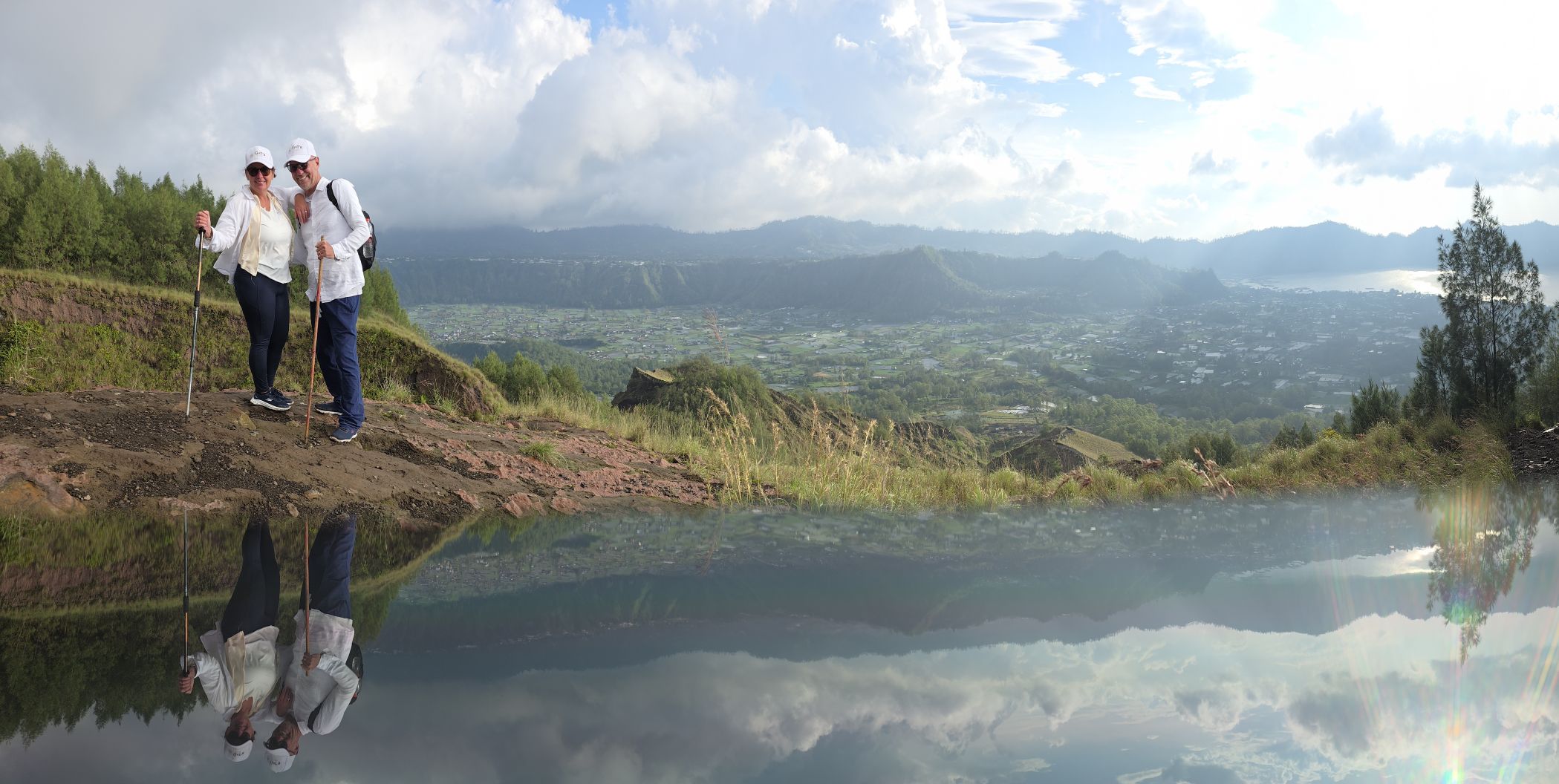
There is something slightly irrational about setting out to climb a volcano in darkness.
We travel thousands of kilometres to see places, then deliberately begin one of Bali's most famous experiences at an hour when we can barely see the ground beneath our feet. Somewhere above us is the summit of Mount Batur. Somewhere below is Lake Batur. Around us is one of Bali's great volcanic landscapes.
But before sunrise, almost all of it disappears.
Perhaps that is part of what makes climbing Mount Batur so memorable. The mountain doesn't reveal itself immediately. First, it asks us to climb.
A Different Bali
Kintamani felt different almost as soon as we arrived.
After experiencing the heat and humidity that define so much of Bali, heading inland brought an unexpected change. The temperature dropped, the landscape opened and suddenly Mount Batur and Lake Batur dominated the view.
We stayed at Tribhuana Padma Hotel, surrounded by the cooler mountain air and volcanic scenery of Bali's highlands. This was still Bali, but it felt removed from the version of the island most often presented to travellers.
There were no beach clubs here. No sunset cocktails overlooking the Indian Ocean. Instead, there was a volcano, an enormous caldera and a lake occupying a landscape shaped over thousands of years by forces far more powerful than anything humans have built around them.
Mount Batur rises to around 1,717 metres within this volcanic landscape, and climbing it before sunrise has become one of Kintamani's defining experiences. The wider Batur area is geologically significant enough that it became Indonesia's first UNESCO Global Geopark in 2012.
Knowing those facts is interesting.
Walking into that landscape in darkness is something else entirely.
The Mountain Before Sunrise
There is a peculiar intimacy to climbing somewhere we cannot properly see.
During daylight, our eyes constantly tell us how far we have travelled and how far remains. In darkness, those reference points disappear. Progress becomes smaller and more immediate.
The next step. The next section of trail. The sound of feet moving across volcanic ground.
Mount Batur's trekking terrain includes rock and loose volcanic sand, and the ascent requires enough effort that the destination has to be earned rather than simply reached.
That distinction has become increasingly important to us while travelling.
So much of modern travel is designed around removing effort. We fly over countries rather than through them. Cars deliver us to viewpoints. Elevators take us to observation decks. Boats deposit us on beaches. There is nothing wrong with any of that, and we have happily embraced plenty of it.
But occasionally a place makes us work.
Mount Batur was one of those places.
And when we have to physically move through a landscape rather than simply arrive in it, our relationship with the destination changes.
When Darkness Becomes Landscape
The reward for climbing Mount Batur isn't simply sunrise.
It is the transformation that happens around it.
What begins as darkness gradually develops shape. The horizon becomes distinguishable. Mountains emerge where moments earlier there appeared to be nothing. Lake Batur becomes visible below, sitting within the enormous volcanic landscape of Kintamani.
The scale becomes apparent only after we have already climbed into it.
This is what makes sunrise from a mountain fundamentally different from watching it from a hotel balcony or beach. The sun itself is the same. What changes is everything that happened before it arrived.
We had begun in darkness.
Now we could finally see where we were.
From the upper reaches of Mount Batur, the surrounding caldera, Lake Batur and mountains beyond form the panorama that draws people onto the trail long before most of Bali is awake.
For a few moments, the effort of getting there becomes secondary.
The landscape takes over.
Standing Inside Bali's Past
Once daylight arrives, Mount Batur becomes more than a viewpoint.
The landscape below is evidence of Bali's geological history. The mountain, caldera, lake and expanses of dark volcanic material are connected to eruptions that repeatedly reshaped this part of the island. Lake Batur itself occupies the volcanic caldera and is the largest volcanic lake in Bali.
From above, those geological facts become easier to comprehend.
We weren't simply standing on a mountain looking across Bali.
We were standing inside the consequences of what the Earth had done here.
That perspective is easy to lose when travelling through destinations where landscapes have become attractions. We give them names, put them on maps, create tours around them and photograph them from designated viewpoints.
But Mount Batur existed long before anyone decided sunrise from its summit belonged on a Bali itinerary.
The volcano doesn't know it is an attraction.
And perhaps there is something grounding about remembering that.
The Journey Back Down
There is another curious thing about climbing somewhere in darkness.
We have to walk back through the landscape we missed on the way up.
The descent reveals what the night concealed. The trail has texture. The mountain has contours. The enormous landscape surrounding Kintamani is no longer an abstraction somewhere beyond the reach of a headlamp.
It also gives us time to understand what we have just done.
At the summit, attention naturally belongs to the sunrise. Coming down, the experience becomes quieter. The destination has been reached, the anticipation has disappeared and all that remains is the journey back through the mountain.
We often think travel is about arrival.
Sometimes the return teaches us just as much.
Final Reflection
Mount Batur is frequently described as one of Bali's great sunrise experiences.
It certainly is.
But remembering it only for the sunrise somehow feels incomplete.
What stays with us is the sequence: beginning in darkness, concentrating on the ground immediately ahead, slowly gaining height and eventually watching an entire volcanic landscape reveal itself as daylight arrived.
Perhaps that is why climbing mountains continues to appeal to travellers despite the early alarms, tired legs and obvious availability of easier viewpoints.
The effort changes the reward.
There are countless places around the world where we can watch the sun rise. What made Mount Batur different was that we had to begin moving before we could see what was waiting for us.
Travel sometimes works the same way.
We don't always know exactly what an experience will give us when we begin. We simply start walking, trust there is something worth discovering ahead and allow the journey to reveal itself.
On Mount Batur, that happened quite literally.
We climbed through darkness.
And Bali slowly appeared beneath us.
With perspective,
G&T
Find stories and insights that inspire your own path forward
Discover insights that elevate your travel, sharpen your leadership, and support your personal growth..

Join Our Adventure Today!
Stay updated with our latest travel stories, tips, and adventures. Join our newsletter!