
Penang Food Culture
Discover Penang’s famous food scene, from hawker centres and street food to iconic Malaysian dishes shaped by generations of multicultural influence
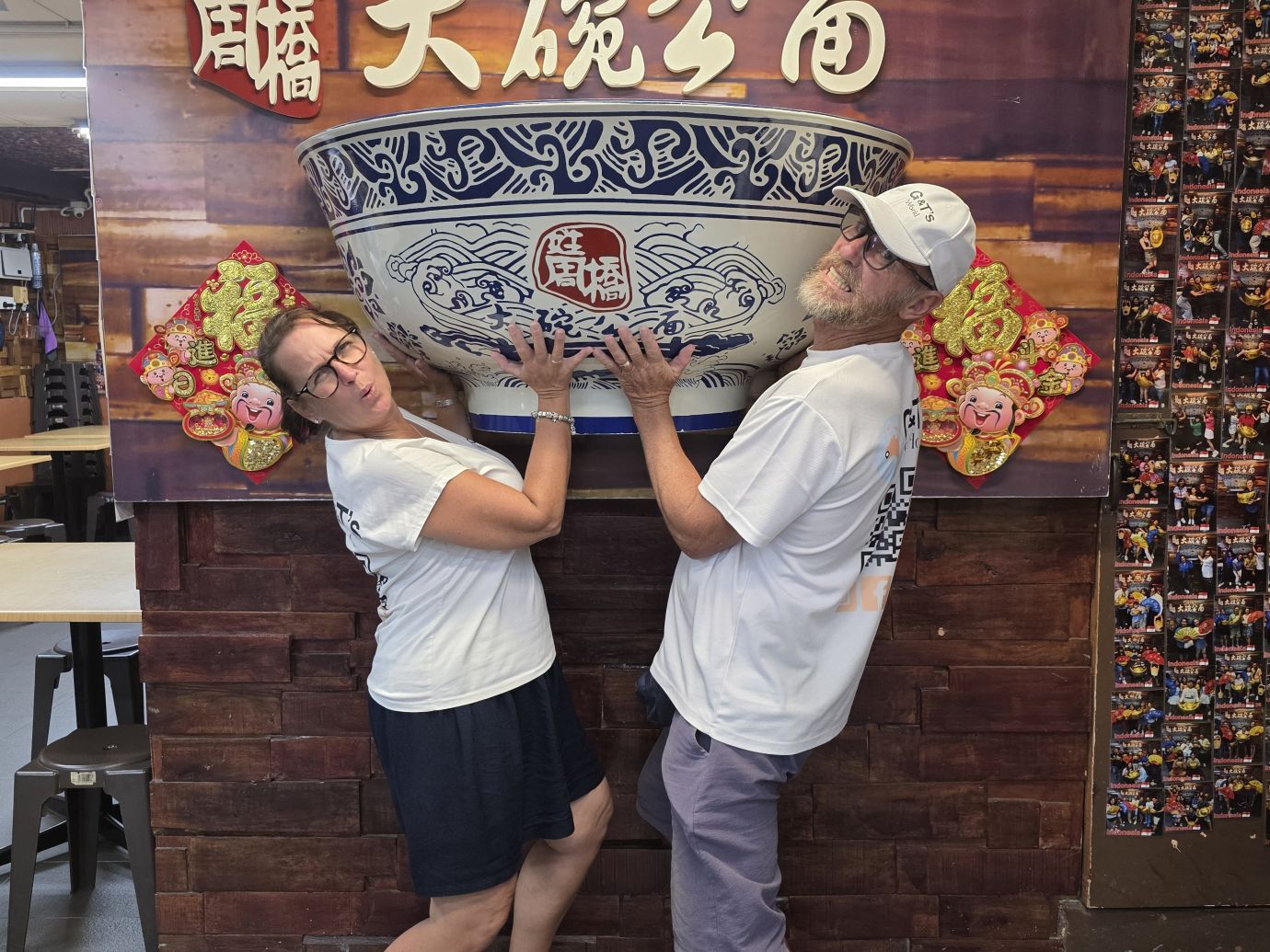
Some cities introduce themselves through architecture. Others through museums, monuments or landscapes.
Penang has another method.
It feeds you.
During the month we spent living on the island, food became part of the rhythm of our days. We weren't racing through George Town trying to tick off somebody else's list of legendary stalls. We had something considerably more useful: time.
Time to return to hawker centres. Time to order dishes we couldn't pronounce properly. Time to watch enormous woks disappear behind clouds of steam. Time to discover that the unassuming stall surrounded by plastic tables could produce something far more memorable than restaurants charging several times the price.
And, occasionally, time to look at whatever had just arrived in front of us and wonder exactly what we had ordered.
Penang is regularly described as one of Asia's great food destinations. After a month there, we understood why.
But what makes Penang's food extraordinary isn't simply how good it tastes.
The remarkable thing is how much of the island's history arrives with it.
History Served in a Bowl
Walk through George Town and Penang's multicultural identity is impossible to miss.
Chinese clan houses sit near Indian temples. Mosques, churches and colonial buildings occupy the same streets. Little India spills music, colour and spice into surrounding neighbourhoods, while Chinese shophouses line streets that have absorbed generations of migration, trade and family life.
Then we sit down to eat and those same influences appear on the table.
Penang's position along historic trading routes brought together Malay, Chinese, Indian and other communities, each carrying their own ingredients and cooking traditions. Over generations, those traditions didn't simply remain beside one another. They influenced, borrowed and adapted.
The result is food that feels inseparable from the island itself.
A bowl of Assam laksa carries the sour intensity of tamarind alongside fish, chilli and herbs. Nasi kandar reflects the influence of Penang's Indian Muslim community, piling rice with curries and side dishes before adding the essential mixture of gravies. Hokkien mee brings prawns and noodles together in a deeply flavoured broth, while curry mee somehow manages to be comforting and fiery at the same time.
We could read about Penang's history in a museum.
Or we could order lunch.
We became quite fond of the second option.
The Theatre of the Hawker Centre
Eating in Penang isn't always a quiet experience.
A hawker centre can feel like organised chaos.
Woks clang against burners. Orders are shouted. Steam rises from pots. Satay smoke drifts through the air. Drinks arrive from one direction while food appears from another. Plastic tables fill and empty as families, workers and travellers share the same noisy dining room.
Then somewhere among it all, someone who may have prepared the same dish thousands of times starts cooking yours.
This was where Penang food made the most sense to us.
There was little ceremony between cook and customer. No elaborate description of ingredients. No carefully choreographed presentation. Often there was simply a plate or bowl placed on the table and an immediate understanding that we should stop talking and start eating.
Char kway teow became one of those dishes.
At first glance, it doesn't necessarily look extraordinary. Flat rice noodles are stir-fried at intense heat with ingredients that can include prawns, egg, bean sprouts and Chinese sausage.
Then comes the first mouthful.
Smoky. Savoury. Slightly sweet. Rich without needing to be complicated.
Much of its character comes from wok hei, the distinctive flavour produced by cooking quickly over fierce heat. It is one of those things that sounds unnecessarily technical until we taste it. Then we understand.
This wasn't fine dining.
It was skilled cooking without the theatre of pretending it was anything else.
The Dangerous Phrase: “Let's Just Try One”
Our approach to eating in Penang became increasingly ambitious.
The problem with hawker food is that individual dishes often seem inexpensive enough to justify ordering another one.
“We'll just try this as well” became a surprisingly dangerous sentence.
A bowl of noodles would arrive, followed by an oyster omelette. Then perhaps some satay because we had walked past the smoke and lost all ability to make rational decisions.
And dessert was obviously separate.
Penang's oyster omelette became another favourite discovery, combining egg, starch and small oysters into something crisp, soft, salty and wonderfully messy. There was no elegant way to eat many of the things we loved in Penang, which somehow made them better.
Then there was cendol.
After walking through George Town's heat and humidity, a bowl of shaved ice with coconut milk, palm sugar syrup, green pandan jelly and beans starts to feel less like dessert and more like medical intervention.
The first spoonful cools everything down.
For several glorious minutes, Penang's humidity loses.
Food Without the Performance
One of the things we came to appreciate most was how little Penang needed to convince us of its culinary credentials.
The food often arrived without performance.
Some of the best meals came from places we might easily have walked past in another city. Fluorescent lighting, plastic chairs, laminated menus and kitchens open to the street aren't usually the ingredients of luxury.
In Penang, none of that mattered.
The luxury was flavour.
It also changed the way we chose where to eat. Instead of searching constantly for “the best” char kway teow or “the number one” laksa, we became more interested in simply trying another version.
That distinction matters.
Food cultures aren't competitions with one definitive winner. Recipes vary between families, neighbourhoods and cooks. The same dish can taste different from one stall to the next, and discovering those differences became part of the fun.
A month gave us permission not to optimise every meal.
If today's bowl wasn't life-changing, tomorrow offered another.
A City That Eats Together
Perhaps the most enduring memory of eating around Penang wasn't any particular dish.
It was the people sitting around us.
At hawker centres and food courts, generations and cultures share space in a way that feels completely ordinary. Families eat beside office workers. Older couples sit near backpackers. Different stalls specialise in food rooted in different cultural traditions, yet everything arrives at the same tables.
Penang's diversity is often discussed through architecture and heritage, particularly in George Town.
Food makes it tangible.
The island's history of migration hasn't produced one cuisine replacing another. It has created a dining culture in which different traditions continue to exist, overlap and influence one another.
Perhaps that is why eating in Penang feels like more than simply eating well.
The island tells its story three meals at a time.
Our Penang Food Starting Point
After a month, we'd hesitate to call any list “the best”. Penang has far too much food, and everyone seems to have a fiercely defended favourite stall.
But if you're beginning your own food journey, these are good places and experiences to put on the map:
- New Lane Hawker Centre – an easy introduction to the energy and variety of Penang street food.
- Chulia Street – combine an evening wandering George Town with noodles, snacks and roadside stalls.
- Cecil Street Market – less about presentation and more about getting among everyday local eating.
- Gurney Drive – a famous option with plenty of choice if you want to sample several dishes together.
- Little India – follow the aromas and explore nasi kandar, curries, roti and Indian sweets.
- George Town's kopitiams – old-school coffee shops are ideal places to discover noodles, breakfast dishes and everyday Penang life.
And rather than searching only for particular stalls, we'd build the experience around the dishes: char kway teow, Assam laksa, Hokkien mee, curry mee, nasi kandar, oyster omelette and cendol.
Order something familiar.
Then order something you can't quite identify.
That's half the fun.
Final Reflection
After a month in Penang, we left with photographs of temples, street art, colonial buildings, beaches and rainforest.
But we also left remembering tastes.
The smokiness of noodles lifted straight from a wok. The sharpness of Assam laksa. Curries soaking into rice. Cold cendol disappearing far too quickly on a humid afternoon.
Food had become another way of understanding the island.
Penang showed us that culture isn't preserved only behind museum doors or within heritage-listed buildings. Sometimes it survives because someone wakes up each morning, turns on a burner and cooks a dish they learned from somebody before them.
Recipes travel across oceans. They adapt to new ingredients and new neighbours. Generations add something, remove something and make them their own.
Eventually, history becomes lunch.
That may be what we loved most about eating our way through Penang. We arrived expecting great Malaysian food and certainly found it.
What we hadn't appreciated was that every plate would tell us a little more about the place itself.
Some cities are best explored on foot.
Penang might be better explored hungry.
With full stomachs,
G&T
Find stories and insights that inspire your own path forward
Discover insights that elevate your travel, sharpen your leadership, and support your personal growth..

Join Our Adventure Today!
Stay updated with our latest travel stories, tips, and adventures. Join our newsletter!