
S21 Phnom Penh
Explore Cambodia's S21 Tuol Sleng Genocide Museum in Phnom Penh, uncovering Khmer Rouge history, survivor stories, remembrance and enduring hope
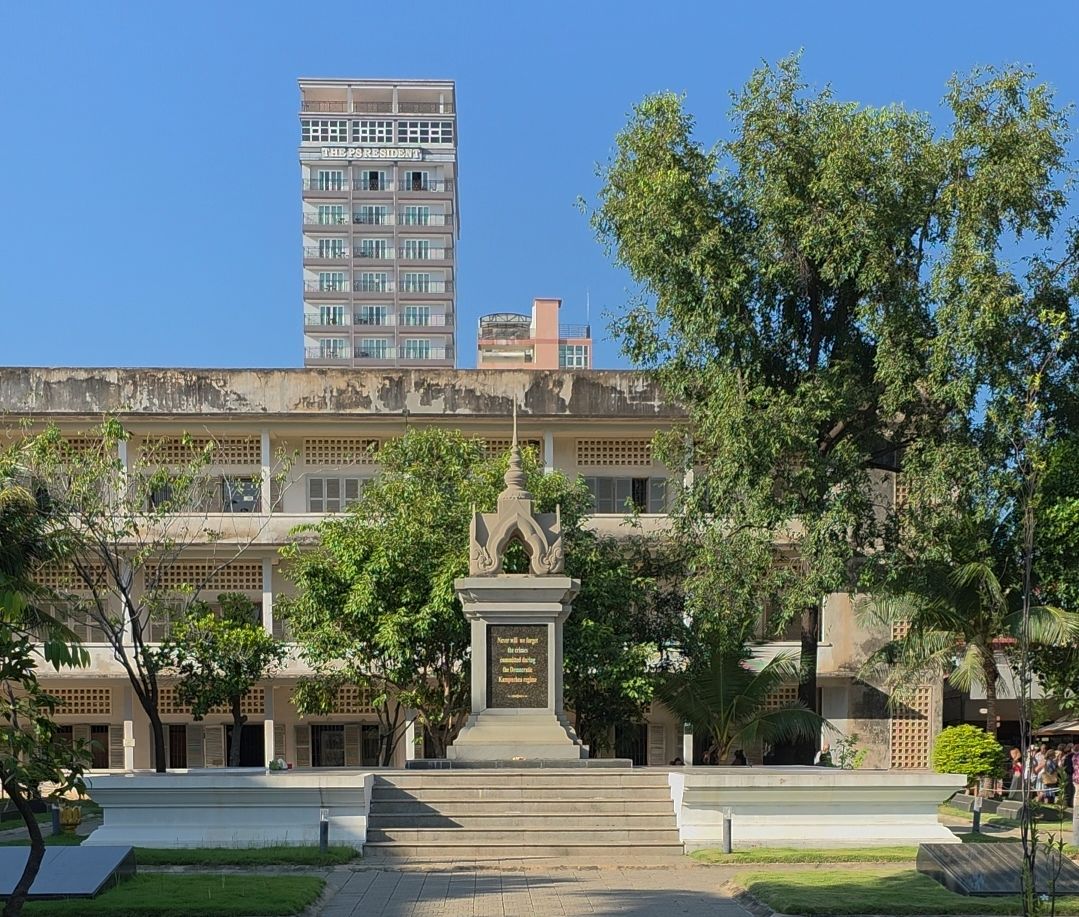
Walking through the gates of S-21 in Phnom Penh, it was difficult to reconcile what stood before us with what we knew had happened here. The buildings looked remarkably ordinary, their classrooms and corridors still recognisable as part of a school. Yet within these walls, thousands of people had been imprisoned, tortured and condemned to death during one of the darkest chapters of Cambodia's history.
We knew this would be a challenging experience, but understanding a country's history means being willing to confront its most difficult chapters, not simply celebrate its greatest achievements.
After travelling through Cambodia and experiencing the warmth of its people, we wanted to better understand the suffering that had shaped so many families within living memory.
Our visit to the Tuol Sleng Genocide Museum, formerly known as Security Prison 21, was confronting, deeply moving and ultimately one of the most important experiences of our time in Cambodia.
It also left us considering questions that extend far beyond the country's borders, particularly about human dignity, the responsibilities of those in power and the importance of remembering what happens when those responsibilities are abandoned.
When a School Became a Prison
On 17 April 1975, the Khmer Rouge entered Phnom Penh, beginning one of the most devastating periods in Cambodia's history.
Led by Pol Pot, the regime sought to transform the country into a radical agricultural society, dismantling existing institutions, abolishing private property and attempting to eliminate perceived class distinctions.
Cities were forcibly evacuated, families were separated and millions of Cambodians were sent to rural labour collectives, where starvation, disease, exhaustion and executions became widespread.
Educated people, professionals, religious figures, ethnic minorities and anyone suspected of disloyalty faced persecution. Even members of the Khmer Rouge were increasingly targeted as paranoia spread through the regime.
Between April 1975 and January 1979, an estimated 1.5 to 2 million Cambodians died, representing approximately a quarter of the country's population.
S-21 became one of the regime's most notorious security prisons.
The former school was transformed into a detention and interrogation centre where prisoners were accused of conspiring against the state, often without evidence. Confessions were extracted through torture, frequently forcing prisoners to implicate family members, colleagues and others.
An estimated 15,000 to 20,000 people were imprisoned at S-21, with only a handful of confirmed survivors.
Many prisoners were eventually transported to Choeung Ek, now commonly known as the Killing Fields, where they were executed.
Walking through the former classrooms, we were struck by how little the physical surroundings resembled what we might imagine a prison to look like.
The familiar architecture made the history particularly disturbing. Buildings originally intended to educate young people had been transformed into instruments of fear, suffering and death.
The Faces Behind the Numbers
One of the most confronting aspects of S-21 is the extensive documentation left behind by the Khmer Rouge.
Prisoners were photographed, registered and interrogated within a system that recorded their identities while systematically denying their humanity.
Today, rows of photographs display the faces of those who entered the prison.
Men, women and children look towards the camera, each image representing an individual whose life was caught in a machinery of suspicion and brutality.
Historical accounts often rely on statistics to communicate the scale of human suffering, but standing before these photographs gave those numbers an entirely different meaning.
Every face represented someone with a family, a personal history and a future that was taken from them.
As we moved through the museum, the preserved cells, interrogation rooms and personal accounts provided a confronting understanding of how the prison operated.
We were grateful to have a guide who explained the historical circumstances and helped us appreciate the significance of what we were seeing.
What troubled us most was the deliberate organisation behind the cruelty.
S-21 wasn't simply a place where terrible acts occurred. It formed part of a system in which accusations, imprisonment, forced confessions and executions were carried out through established procedures and chains of command.
The prison demonstrated how institutions can become instruments of oppression when authority operates without accountability and individuals are stripped of their basic rights.
The Courage to Remember
Among the most significant moments of our visit was meeting Chum Mey, one of the few known survivors of S-21.
Having just walked through the rooms where prisoners were detained and interrogated, standing in the presence of someone who had personally endured that experience brought the history into the present in a way no photograph or written account could.
Chum Mey survived partly because his mechanical skills were considered useful by the prison authorities. His testimony has since helped preserve an understanding of what occurred within S-21.
We felt privileged to meet him, conscious that his presence represented not only survival but also the extraordinary importance of firsthand testimony.
The Khmer Rouge regime fell in January 1979, and S-21 was subsequently preserved as the Tuol Sleng Genocide Museum.
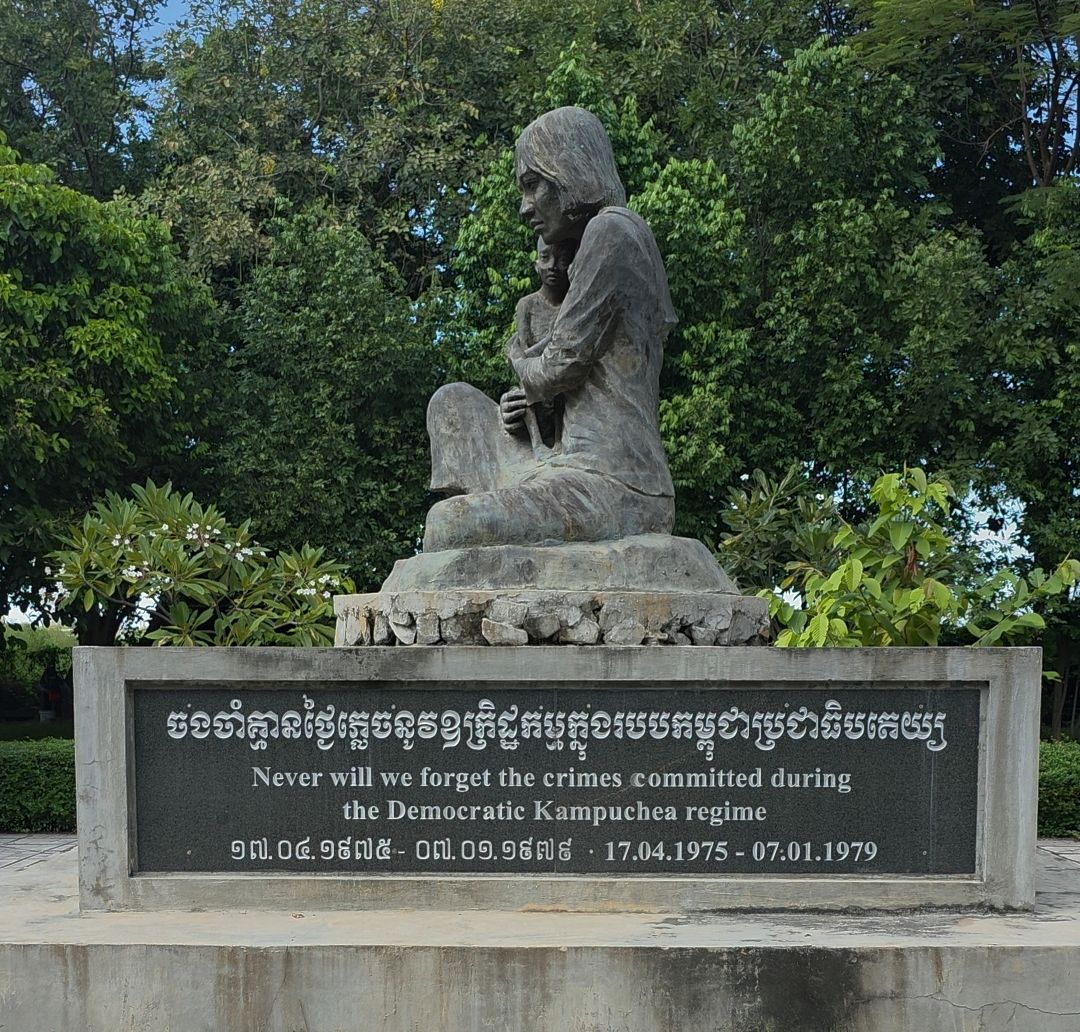
Today, the site serves as a place of remembrance, historical education and evidence of the atrocities committed during those years.
In 2009, the museum's archives were recognised through UNESCO's Memory of the World Register, acknowledging their significance in documenting crimes against humanity.
The surviving records have also contributed to efforts to establish accountability through the Extraordinary Chambers in the Courts of Cambodia, the tribunal established to prosecute senior Khmer Rouge leaders and those most responsible for serious crimes.
Justice cannot restore the lives that were taken, nor erase the suffering endured by survivors and their families. But preserving evidence, documenting testimony and acknowledging responsibility are essential to ensuring that history cannot simply be denied or rewritten.
For us, meeting Chum Mey reinforced the importance of that work.
The events of S-21 are not distant history. They remain part of the lived experience of individuals and families throughout Cambodia.
Why Remembering Matters
Leaving S-21, we found ourselves reflecting on the freedoms we often take for granted.
The ability to express an opinion, pursue an education, question authority, choose where to live and make decisions about our future can seem ordinary until we consider what happens when those freedoms disappear.
Cambodia's experience is a devastating example of what can occur when extreme ideology, fear and unchecked power are allowed to override basic human dignity.
It also raises uncomfortable questions about the world we live in today.
Conflict, persecution, political division and human rights abuses continue to affect communities across the globe. While contemporary circumstances should not be casually equated with the Khmer Rouge's crimes, the underlying importance of protecting human rights, independent institutions and accountability remains clear.
Atrocities rarely emerge without warning. Dehumanisation, repression and the normalisation of cruelty can create conditions in which increasingly extreme abuses become possible.
Remembering history does not guarantee that humanity will avoid repeating its mistakes, but understanding how such events occurred gives future generations a better opportunity to recognise the dangers.
Perhaps that is the most important purpose of places such as S-21.
They ask us to confront uncomfortable truths, question our assumptions and consider the responsibilities we share towards one another.
A Place of Suffering, A Reason for Hope
Despite the sadness associated with Tuol Sleng, we left with a sense of hope.
Not because the suffering can ever be undone, but because the museum ensures that those who endured it are remembered and that future generations have the opportunity to understand what happened.
There is something deeply meaningful about transforming a place once used to destroy lives into one dedicated to education, remembrance and the preservation of truth.
It does not diminish the horror of what occurred within these walls, but it gives the site a purpose that stands in direct opposition to the intentions of those who once controlled it.
We would strongly encourage anyone visiting Phnom Penh to make time for the Tuol Sleng Genocide Museum and, where possible, the Killing Fields at Choeung Ek.
Neither is an easy experience, and both deserve to be approached with sensitivity and respect. Yet understanding Cambodia requires acknowledging not only its magnificent ancient achievements and vibrant contemporary culture, but also the suffering that has shaped its recent history.
We were grateful for the opportunity to visit, humbled by the resilience of those who survived and deeply conscious of the thousands of people whose lives were taken.
Above all, we left with a greater appreciation of the responsibility that comes with knowing.
We cannot give back the lives that were taken, but we can ensure they are not forgotten. And perhaps the greatest responsibility of remembering is recognising what must never be allowed to happen again.
With remembrance and hope,
G&T
Find stories and insights that inspire your own path forward
Discover insights that elevate your travel, sharpen your leadership, and support your personal growth..
Join Our Adventure Today!
Stay updated with our latest travel stories, tips, and adventures. Join our newsletter!