
Siem Reap Beyond Angkor
Discover Siem Reap, Cambodia, beyond Angkor Wat, exploring vibrant markets, Pub Street, local culture, affordable travel and authentic Cambodian charm
When we arrived in Siem Reap, we knew exactly what had brought us here. Like millions of travellers before us, we wanted to experience Angkor Wat and the extraordinary temples that have made this part of Cambodia famous throughout the world.
What we hadn't anticipated was just how much we would enjoy the city itself.
After spending much of 2026 travelling through Southeast Asia, we've become familiar with destinations transformed by tourism. Modern hotels, international restaurants, shopping complexes and increasingly sophisticated infrastructure have made travel more comfortable, but sometimes that development comes at the expense of the character that made those places appealing in the first place.
Siem Reap reminded us of a side of Southeast Asia that feels increasingly difficult to find: relaxed, welcoming and developed enough to be comfortable without feeling completely shaped by tourism.
There was something refreshingly uncomplicated about its atmosphere, lively streets and everyday rhythms. Although new developments and modern conveniences are gradually changing its appearance, the city still retains much of the charm that makes travelling through this part of the world so enjoyable.
After spending fourteen nights here, we came to appreciate that Siem Reap deserves recognition as a destination in its own right, rather than simply somewhere to stay while exploring Angkor Wat.
Beyond the Shadow of Angkor
Siem Reap's international reputation is inseparable from the remarkable history of the Khmer Empire.
Between the ninth and fifteenth centuries, Angkor developed into one of the most significant urban and religious centres in the premodern world. Its rulers constructed magnificent temples, extensive reservoirs and sophisticated infrastructure that supported a civilisation of extraordinary ambition.
Angkor Wat, built in the early twelfth century during the reign of King Suryavarman II, remains the most recognisable expression of that achievement.
We spent two days exploring ten temples across the Angkor Archaeological Park, discovering an extraordinary collection of architecture, history and cultural heritage. The experience was everything we had hoped for, but it also encouraged us to appreciate the modern city that has developed alongside this remarkable inheritance.
Siem Reap's transformation accelerated as Cambodia emerged from decades of conflict and gradually reopened to international visitors. Angkor's inscription on the UNESCO World Heritage List in 1992 helped bring renewed attention to the region, encouraging tourism investment and supporting the growth of hotels, restaurants and local businesses.
What was once a modest provincial centre evolved into one of Cambodia's most important tourism destinations.
Today, the city's challenge is no longer simply attracting visitors. It is finding a way to accommodate continued growth while preserving the character that makes Siem Reap distinctive.
The Charm of an Earlier Southeast Asia
One of the things we appreciated most about Siem Reap was how easily we settled into its everyday rhythm.
During our fourteen-night stay, we enjoyed comfortable accommodation, excellent restaurants, welcoming cafés and lively markets, all within a relatively accessible city centre.
There was plenty happening, but rarely did we feel overwhelmed by it.
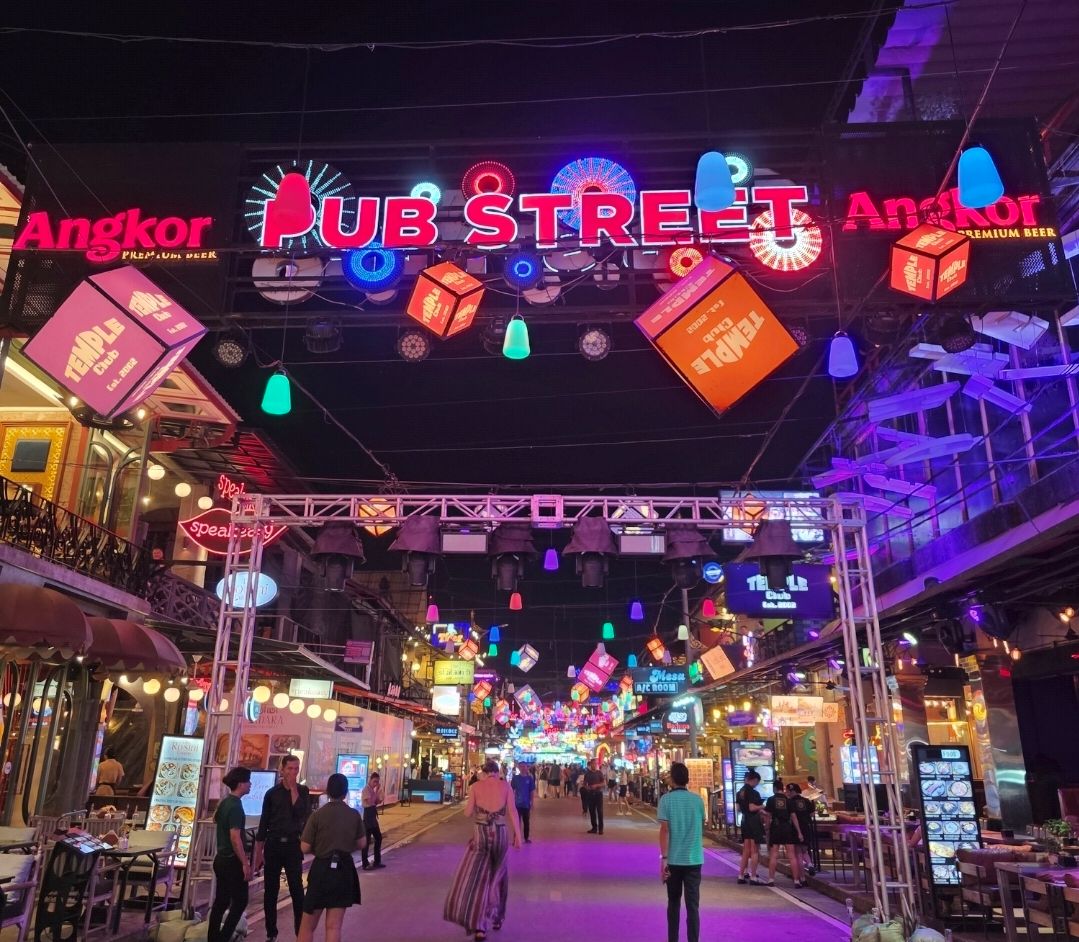
Pub Street is perhaps the clearest expression of Siem Reap's tourism economy. By evening, its restaurants, bars and entertainment venues create a lively atmosphere, with music, colourful lights and visitors from around the world.
It's unapologetically tourist-oriented, yet remains approachable and surprisingly affordable. Inexpensive meals, drinks, and readily available tuk-tuks make enjoying the city relatively easy for international travellers.
Nearby night markets offer another dimension, with vendors selling clothing, jewellery, handicrafts, souvenirs and local food. Beyond these busy precincts, quieter streets reveal a more relaxed side of the city, where everyday Cambodian life continues alongside the visitor economy.
What appealed to us was the contrast.
Siem Reap offers the conveniences travellers have come to expect without feeling as though every street has been redesigned around international tourism. Modern accommodation sits alongside traditional markets, lively entertainment areas give way to quieter neighbourhoods, and familiar international influences coexist with a distinctly Cambodian identity.
Having travelled extensively throughout the region, we've come to appreciate that a destination's appeal isn't always determined by its attractions or facilities. Sometimes it's found in the atmosphere, the ease of everyday interactions and the freedom to enjoy somewhere without feeling that every moment needs to be organised.
Siem Reap offered that experience in abundance.
When Charm Meets Progress
There is, however, an interesting contradiction in the way travellers sometimes think about destinations such as Siem Reap.
We often celebrate places that appear relatively untouched by development. We admire their simplicity, traditional character and absence of large-scale commercialisation, occasionally wishing they could remain exactly as we found them.
But what visitors perceive as charm isn't necessarily what residents perceive as progress.
Improved roads, reliable infrastructure, better healthcare, education and greater employment opportunities are not threats to a community's identity. They are essential ingredients in improving people's lives.
Siem Reap's tourism industry has created significant economic opportunities, supporting accommodation providers, restaurants, transport operators, market vendors and countless small businesses. Yet dependence on international visitors also brings vulnerabilities, particularly when tourism declines or economic conditions change.
We've witnessed similar tensions throughout Southeast Asia. As destinations become more popular, investment can bring prosperity and improved services, but also rising costs, commercial pressures and changes to traditional neighbourhoods.
Not every change represents a loss, just as not every older feature deserves preservation simply because visitors find it picturesque.
The more meaningful question is whether a destination can become more prosperous without becoming indistinguishable from everywhere else.
Siem Reap appears to be navigating that question in real time.
Its expanding tourism services and improving infrastructure demonstrate a city embracing opportunity, while its markets, neighbourhoods and relaxed atmosphere continue to provide a sense of place that feels distinctly Cambodian.
For us, that balance is part of what makes the city so appealing. It offers a reminder that development and cultural identity need not be competing ambitions, provided the people who call a destination home remain central to decisions about its future.
A City Worth Staying For
Perhaps the greatest surprise of our visit was discovering how much we enjoyed Siem Reap when we weren't exploring its famous temples.
Fourteen nights gave us the opportunity to experience the city at a comfortable pace, without the pressure of trying to fit everything into a brief itinerary.
We had time to appreciate the restaurants, markets and cafés, enjoy the lively evening atmosphere and discover the quieter side of a destination that many visitors experience only as a base for Angkor Wat.
Beyond the city, places such as Kampong Phluk and Tonlé Sap Lake reveal another dimension of Cambodian life, where communities have adapted their livelihoods and traditions to the extraordinary seasonal rhythms of the natural environment.
Together, these experiences helped us appreciate that Siem Reap is much more than a collection of tourism businesses surrounding an internationally recognised attraction.
It is a living city with its own history, communities and aspirations, where the legacy of an ancient civilisation exists alongside the realities of modern Cambodia.
When we reflect on our time here, Angkor Wat will undoubtedly remain one of the great highlights of our Cambodian journey. The scale of its architecture, the complexity of its history and the extraordinary temples surrounding it deserve their international reputation.
But our memories of Siem Reap will extend well beyond those ancient monuments.
We'll remember the welcoming atmosphere, the lively evenings around Pub Street, the pleasure of wandering through local markets and the simple enjoyment of spending time somewhere that never seemed to demand our attention.
We arrived expecting to be impressed by Cambodia's extraordinary past, and we certainly were. What surprised us was discovering a city whose present was equally enjoyable in an entirely different way.
Siem Reap will undoubtedly continue to change, as all growing destinations do. And while we hope it retains the warmth and character we enjoyed, its future should ultimately be shaped by the needs and aspirations of the people who live there, rather than the nostalgia of those passing through.
For now, it remains a place where history draws you in, everyday life encourages you to slow down and the atmosphere makes staying a little longer feel entirely worthwhile.
Angkor Wat may be the reason travellers come to Siem Reap, but the city itself provides plenty of reasons to stay.
With curiosity,
G&T
Find stories and insights that inspire your own path forward
Discover insights that elevate your travel, sharpen your leadership, and support your personal growth..
Join Our Adventure Today!
Stay updated with our latest travel stories, tips, and adventures. Join our newsletter!