Beyond The Audience
How full-time travel revealed the hidden influence of status and the freedom found in choosing utility over appearance.

One of the great challenges of stepping away from a structured life is discovering what remains when the scaffolding falls away.
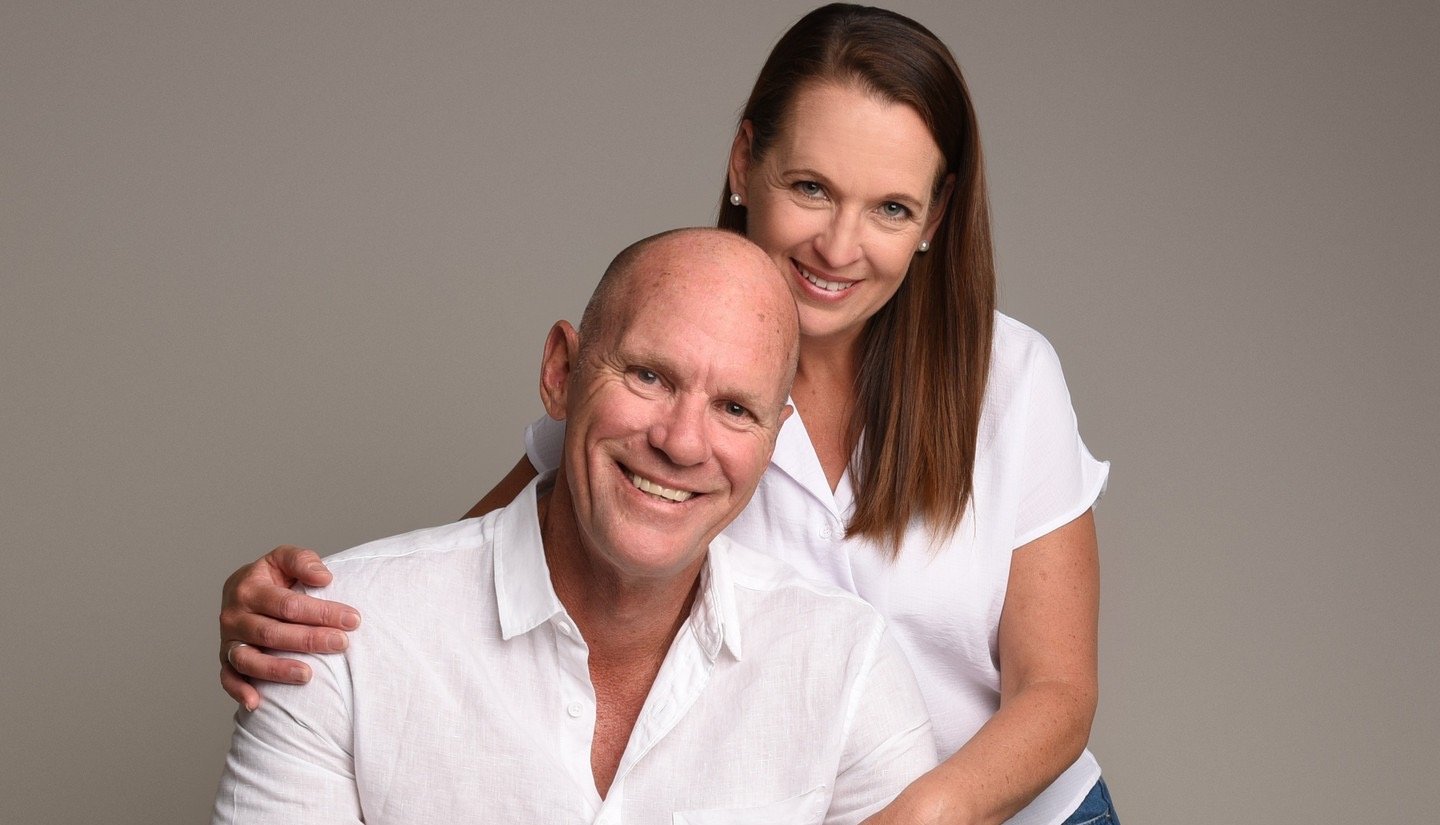
When Trina and I chose to leave behind the rhythms, roles, and reassuring symbols that had shaped our identity for decades, we weren't simply trading a home for a backpack. We were confronting a more difficult question: what happens when the markers of status, stability, and expectation no longer apply?
Everything that had once felt fixed was about to move. Work routines, neighbourhood cues, professional identity, possessions, and even the subtle reinforcement that comes from being recognised for what you do rather than who you are.
Stepping away from all of it demands an uncomfortable level of honesty because you are suddenly forced to confront the gap between who you are and who you have been performing.
For years, we rarely questioned the lives we had built. We worked hard, progressed in our careers, accumulated possessions, and made decisions that felt sensible and responsible. Like most people, we assumed our choices reflected our preferences.
It took leaving that life behind to realise how many of those preferences had been shaped by an invisible audience.
The Invisible Audience
A simple thought experiment helped us see this more clearly.
Imagine living on a deserted island with only the person you love and no one else watching. No one would see your car, your clothes, your devices, or your home. No one would recognise the brands you wear or know which restaurants you once frequented. No one would ask about your job title, your income, or your achievements.
Without an audience, the entire category of status loses its oxygen.
And when the performance ends, something else rises to the surface.
Utility.
We wouldn't want the sprawling home. We'd want a small place with a peaceful view. We wouldn't want the expensive car. We'd want the reliable scooter. We wouldn't choose the labels or the signals. We'd choose what genuinely supports the life we want to live.
This is more than an island fantasy. Social psychologist Timothy Wilson argues that we are often "strangers to ourselves," influenced by motivations and assumptions we rarely examine. Much of what we believe we want has been shaped by social expectations, comparison, and the desire for approval.
The unsettling truth is that many of our choices are made with imaginary observers in mind.
Status Versus Utility
Once you learn to distinguish between status and utility, you begin to see the difference everywhere. You see it in the cars people finance, the suburbs they stretch to live in, and the possessions that quietly accumulate in spare rooms. You notice it in meetings designed more for signalling than substance and in career paths pursued more out of comparison than genuine calling.
Status is outward facing. Utility is inward facing.
Status asks how life appears.
Utility asks how life feels.
The modern world rewards the former long before it recognises the value of the latter. Status says, "Look at me." Utility asks, "Does this help me live well?"
When we decided to travel full-time, we realised how deeply these expectations had embedded themselves into our lives. Not because we were seeking attention, but because status quietly shapes our routines, our wardrobes, our calendars, and our assumptions about what success is supposed to look like.
Letting go of those things felt destabilising in ways we hadn't anticipated.
You don't just surrender your possessions, your house, or your job title. You surrender the social scaffolding that gives other people a shorthand for understanding who you are.
When the Signals Disappear
I remember how strange it felt in those first few weeks of travel when people asked what we did. For decades, the answer had been immediate. Our work had provided a convenient explanation of who we were, not just for others, but for ourselves.
Suddenly, that answer no longer existed.
At first, the absence felt uncomfortable.
Then it felt liberating.
Because when nobody knows your title, your income, or your achievements, you begin to realise how little those things matter in forming meaningful connections. Nobody is impressed by the role you used to hold or the things you once owned. They care about your curiosity, your kindness, your stories, and your willingness to engage with the world around you.
Long-term travel has a way of stripping away those signals. Nothing dissolves status illusions faster than arriving in a new place where nobody knows your background, your achievements, or the things you once owned.
What matters instead is comfort, reliability, connection, curiosity, and the alignment between your choices and the kind of life you want to live.
The Calm of Utility
The biggest surprise in this transition has been discovering how steady utility feels.
It is simpler, calmer, and more honest.
A reliable pair of walking shoes becomes more valuable than a wardrobe full of options. A well-organised backpack becomes more useful than an entire room of belongings. Experiences begin to offer a richness that possessions never could.
Behavioural economists Daniel Kahneman and Richard Thaler have demonstrated how consistently we misjudge what brings lasting satisfaction. Context, comparison, and social reinforcement shape far more of our decisions than we like to admit. Unless we examine these forces carefully, we risk designing our lives around how we hope they will look rather than how they will actually feel to live.
Utility forces a different set of questions. Does this support my wellbeing? Does this reduce friction? Does this align with my values? Does this help me live the life I want?
When you walk through an airport carrying everything you own, status becomes remarkably difficult to maintain.
What remains is clarity.
And clarity creates a steadier sense of identity, one that depends less on external validation and more on internal alignment.
Redefining Freedom
Slowly, a new pattern has emerged.
Your identity is shaped far more by what you value than by what you display.
We often assume freedom comes from having more choices, more options, and more ways to signal success to the world around us. Yet the longer we travel, the more we wonder whether real freedom comes from needing fewer things to feel like ourselves.
Perhaps that is one of the greatest gifts of stepping away from a structured life. It creates enough distance to recognise which parts of ourselves are authentic and which parts were simply responses to expectations we inherited without question.
You begin to understand that fulfilment rarely comes from being admired.
More often, it comes from living in alignment with what genuinely matters.
With Utility,
G&T
Find stories and insights that inspire your own path forward
Discover insights that elevate your travel, sharpen your leadership, and support your personal growth..


Join Our Adventure Today!
Stay updated with our latest travel stories, tips, and adventures. Join our newsletter!